
These show up on the balance sheet under cash and cash equivalents as part of current assets. Brown Woods is a furniture manufacturing company that caters to the office furniture market. Its products have a good demand, and the company often gets bulk orders for furniture supply.

Detailed Guidelines on How to Classify and Report Cash Equivalents Under IFRS
In addition to that, CCE can also be used to pay https://www.bookstime.com/ off debt or to buy back shares. Thus, CCE are an important part of any company’s financial planning and should be managed carefully. During the financial review, the CFO highlighted the increase in cash equivalents as a positive indicator of the company’s improved liquidity position. A low CCE balance may indicate potential liquidity issues and an inability to meet short-term obligations. However, if the company efficiently manages its working capital and investments, a lower CCE balance may not necessarily be negative. Cash and cash equivalents are the liquid resources readily available to the company, whereas accounts receivable are amounts owed by customers that have yet to be collected.

Examples of Cash and Cash Equivalents
Master the definition, strict qualification rules, common examples, and financial reporting of cash equivalents to assess company liquidity. This ratio includes cash and equivalents, plus accounts receivable (money clients owe you). It excludes inventory, making it a solid indicator of liquidity when you need to cover short-term obligations without relying on selling stock. Cash equivalents are short-term, low-risk investments that can be quickly converted into cash, typically within three months.
Types of short-term Investments that do not qualify as cash equivalents
Proper classification and presentation help in maintaining the integrity and comparability of financial statements across different reporting periods. Cash equivalents are a critical component of financial analysis, significantly impacting liquidity ratios and overall financial health. Investors and analysts rely on these metrics to assess risk, make investment decisions, and compare companies within and across sectors.
Additional Disclosures Required in the Notes to Financial Statements
- Another important criterion is that the asset should have minimal interest rate risk.
- Moreover, cash carries virtually no risk, since it doesn’t fluctuate with interest rates or market conditions in the same way that certain investments, even short-term ones, do.
- The designation allows analysts to interpret a company’s true liquidity position beyond simply reviewing its checking account balances.
- Lenders, investors, and partners typically look at your cash and cash equivalents to gauge your financial health.
- The primary components of cash and cash equivalents encompass cash on hand, bank balances, and short-term investments like Treasury bills and commercial paper.
These instruments provide a safe and efficient way to manage liquidity, helping businesses maintain financial stability and flexibility. Adhering to these standards ensures what are retained earnings consistency, transparency, and comparability of financial statements, allowing stakeholders to make informed decisions based on reliable financial information. Cash equivalents represent a fundamental concept in financial reporting, signifying assets that are nearly as liquid as physical currency. Understanding this classification is paramount for investors and creditors assessing a company’s immediate financial health.
- Cash equivalents are extremely low risk assets without meaningful price fluctuations.
- Accounting Standards Codification 305 (ASC 305) was released to address the more specific topic of cash and what equivalents can be considered cash on a company’s balance sheet.
- What’s considered a reasonable number of cash and cash equivalents to have on hand varies greatly from industry to industry.
- These assets are crucial components of working capital calculations, directly impacting a firm’s ability to meet its short-term obligations.
- Cash and cash equivalents represent the most liquid assets on a company’s balance sheet, providing a clear picture of its immediate financial health.
- A business can be profitable and still not be able to pay its bills on time because money was not managed properly.
- The use of cash and cash equivalents dates back to the early days of banking and finance when businesses needed readily accessible funds to handle daily operations and unexpected expenses.
However, it’s important to note that not all current assets are cash and cash equivalents, as entries like accounts receivable will also be there. Cash and cash equivalents are calculated simply by adding up all of a company’s current assets that can reasonably be converted into cash within a period of 90 or fewer days. Cash equivalents, on the other hand, are short-term, highly liquid investments that can be quickly converted into cash. The difference lies in the fact that cash equivalents must first be converted into cash. Cash equivalents are cash equivalents definition short-term investments that can be easily liquidate, carry low risk of loss, and have active marketplaces to ensure quick transacting.
Purpose of Cash and Cash Equivalents
It does not include any longer-term assets or equity items, since they cannot be readily converted into cash. A sample presentation of cash and cash equivalents appears in the balance sheet in the following exhibit. You’ll see them reported as a single line item on the balance sheet, listed under current assets. This classification reflects the liquidity and availability of cash and cash equivalents to meet short-term financial obligations. Cash equivalents are defined as short-term investments that can be quickly converted into cash while incurring a minimal loss in value.

Looking for software system to improve your business efficiency?
Effective presentation of cash and cash equivalents involves detailed disclosure of the types of assets included, such as bank balances, short-term investments, and marketable securities. This transparency ensures that investors and creditors can accurately assess the company’s liquidity position. It also helps in evaluating the firm’s ability to meet short-term obligations without needing to liquidate other assets.
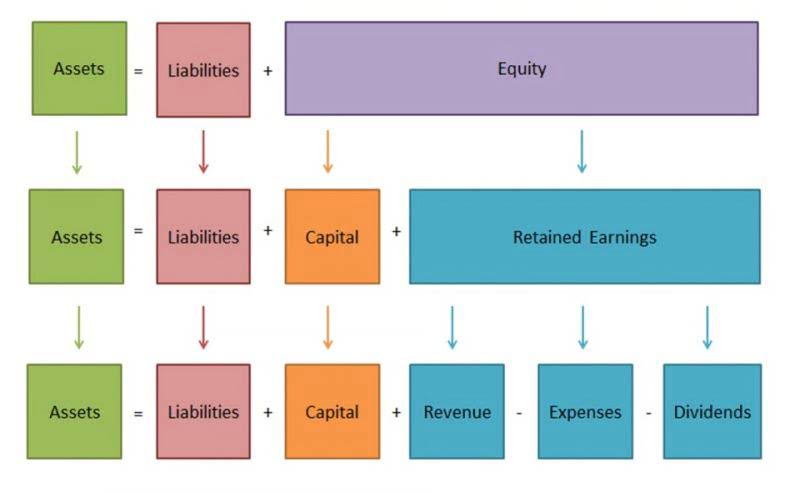
Cash and cash equivalents help companies with their working capital needs since these liquid assets are used to pay off current liabilities, which are short-term debts and bills. Cash and cash equivalents are part of the current assets section of the balance sheet and contribute to a company’s net working capital (NWC). The definition of cash equivalents presumes these are highly liquid investments. Combined, they are cash and cash equivalents (CCE), an important part of a company’s balance sheet. CCE reveals how much liquidity a company has to cover short-term liabilities and keep the lights on without taking desperate measures. Cash and cash equivalents (CCE) are a company’s most liquid assets and could be tapped into when needed to cover expected or unexpected expenses.
To be classified as a cash equivalent, an item must be unrestricted, so that it is available for immediate use. Companies maintain cash equivalents to cover short-term expenses, manage operational needs, and ensure they can handle financial emergencies or take advantage of immediate opportunities. Cash equivalents are designed to be low-risk investments, providing stable returns with minimal volatility.
