Home Blog Page 3

The use of emptiness and reality in Ishiguro’s novels

The use of emptiness and reality in Ishiguro’s novels

Sandeep K. Pandey (Research Scholar)

Prof. Karunesh Jha (HOD)

Department Of English

Pandit Shambhunath Shukla University

Shahdol, Madhya Pradesh

Email. sandeepandey.eng@gmail.com

Contact no. 8815212021

Abstract

The writings of Ishiguro reflect a sense of emptiness and loneliness concerning isolation and identity crisis faced by the characters within the story. The writings of Ishiguro reflect the past and are subjective about the history and cultural preferences of the characters written by Ishiguro. The significance of memory in bringing out the reflection of the past life in the present situation is very significant in the works of Ishiguro. The majority of his work focuses on people who have been a part of World War II or have some historical connection to the incident.

Novels such as “An Artist of the Floating World” denote emptiness through the characters of Ono and his course of development. Crisis is another significant theme found in his works. It is reflected either through an emotional perspective or through situations in the work of Ishiguro. Novels such as “An Artist of the Floating World”, “The Unconsoled” and “The Remains of the Day” highlight the theme of crisis in relation to masculinity. Another significant characteristic found in the work of Ishiguro is the use of non-realistic modes of friction with a combination of native realism. The need of identity in the eyes of the homeless is another feature, which are highlighted in the novel of Ishiguro. This can happen due to his own life experience as he shifted from Japan to Britain.

Keyword: reflect, characters, story, emptiness, crises

Introduction

Emptiness is one such feeling that is related with the living of an individual in the society. Emptiness refers to the feeling of loneliness or nothingness, which makes a person feel empty in his or her personal life. There are various causes that cater to the cause of emptiness in the life of an individual which include rejection faced at the end of the loved ones, loss of loved ones or unable find any reason of living which makes them feel empty in their individual life. As the life of humans is a roller coaster of emotion and feelings there are certain times in lives, where an individual is unable to identify the real cause of their living or the rejection that face at the hands of their loved ones seems to curb their emotions over longer period. If taken into account isolation is another phase that might cause a feeling of emptiness in the life of an individual.

Ishiguro is his writings have expressed emptiness in the abode of loneliness, rejection, identity crisis and isolation. Ishiguro in his books has taken into account all the factors with the help of various small and big characters in explaining the various shades of emptiness. Most of the writings of Ishiguro reflect an atmosphere of emptiness and depressing reality according to the characters and their life. His writing is a mixture of the chronology of the past and subjective narration along with descriptions from history. The reflection of the emptiness within the life of his characters is happening during a major significance from history.

Reality as a reflection of emptiness though has been portrayed in a vibrant manner in his books like “Klara and the Sun”, “The Buried Giant” and in “An Artist of the Floating World”. Therefore, it has been observed that the characters in the books like Masuji, Ono, Etsuko, Rex, Klara and some other small characters from some other books they tend to portray the emptiness. Another such example might be the portrayal of the emptiness that is felt in the life of Stevens due to his own working rules that he maintained in his life. Therefore, the writing will deal with the various portray of emptiness with the help of the major and small characters in the novels of Ishiguro

Reality as a reflection of the Emptiness

Reflection on Zen Buddhism is a notable feature in his writing. Ishiguro’s second novel ‘An Artist of the Floating World’ written in the year 1986 reflects the notions of the floating world through his writings. In Japanese culture, floating world means accepting “the sorrowful nature of a fleeting life in the present mundane world”. Masuji Ono the protagonist attempts to reconcile with himself amidst the regulations of society. John Rothfork provides an analytical understanding based on the novel. He supported his claims and found out the perspectives in regard to the interrelation of emptiness and reality. The ending of Ishiguro is mainly a paradox where the characters face issues from the past. The ending of his writings mostly sees characters accepting their current state and who they have become during the course of their journey along with a realisation of the sorrow.

His works focus on the life of people who have been a part of World War II or have a history concerning that specific period. In his work, memory is used as an important tool in the identification and understanding of the characters in present reality. In the majority of his novels, the characters use memory as a tool to establish their present and past situations.

Ishiguro used memory to deal with trauma and feeling of emptiness due to several historical references as special references (Ray 2). In his writing, Ishiguro uses memory to bring forward the human experience to bring forth emptiness and reality throughout his characters. The elements of changing perspectives due to changing are strongly related to the core elements of the ‘An Artist of the Floating World’. The sense of emptiness is observed in the character of Ono during the course of his psychological development. This development has a strong relationship to the characteristic features of Zen Buddhism thoughts. It is one of the prominent features of the Japanese people and is based on their cultural beliefs (Oyama 3). Ishiguro’s writings use a paradigm based on his Asian Heritage to interpret his manners about his experiences. As a part of the study, researchers pointed out the similarity of the literature and cinema, which includes visual frames derived from the writings of Ishiguro. The idea of visualisation like the montage brings forward the theme of Ishiguro’s writings. “Never Let Me Go” earned Ishiguro Nobel Prize in the year 2017 bringing forwards the narrative of engaging the reader’s thinking and imagination (Oprisnyk 6).

The novel focuses on the relationships between friends and identity concerning the current reality of the world. Through the friendship trio in this story, Ishiguro tried to bring forward the reality of human actions in life decisions and questions between fake notions and reality. Ishiguro also points out the notable differences between stimulation and reality about the decisions taken by the characters shaping up their life. The theme of identity concerning emotional attachment with their guardians brings forward the reality of changing relations in one’s life. Much of the story is narrated through future perspectives keeping the change intact through the course of her entire life (Kara 73). Ishiguro’s novel reveals the emotion one exhibits in their life while experiencing ethical loss. The world of his characters revolves around the trauma faced in reality along with flawed human existence. Ishiguro’s protagonist continuously reflects on the loss and the feeling of emptiness concerning the present situation. Narratives shaping the identity are one of the prominent parts of his writings.

The issues taking place in the life of his characters are because of their complex nature. The narrative style involves attributes, particularly concerning the cultural preferences or beliefs followed by him. Ishiguro’s writing depicts a sense of reality and occurrence and his writing cannot be labelled under modern writing standards. He is greatly influenced by the happening of the World war and he feels the negative emotions of the people in that specific period. Ishiguro friction does not resolve the conflict but rather deters the resolution in regards to the post-modernist movements (Matovic 3). Ishiguro was widely praised for portraying the historical reality in his first three novels. It brought out the clear significance of the involvement of the issues of the past life and their emptiness in the present situation. The significance of emptiness can be explained through various themes associated with the story. The use of emptiness can be portrayed through the constant reflection of their past life along with the present situation. Kazuo Ishiguro created his own narrative style by combining the use of the reality of the situation and the flow of memories in relationship to the life of the protagonist. The involvement of Ishiguro’s own style of techniques such as musical structure and s polyphonic counterpoint is very well seen in the novel ‘A Pale View of Hill’ (Jiang 2). As a form of thematic analysis, Ishiguro uses various narrative techniques to bring forward the reflection of reality in his works (Taketomi, 2011). In order to combine different elements together Ishiguro uses instances from history to reflect the current reality in portraying the emptiness in the life of the characters throughout his novel.

Crisis and realism

Three of Kazuo Ishiguro’s writings The Unconsoled, An Artist of the Floating World and The Remains of the Day contain the theme of crisis in relation to masculinity, which is the base of the writing for all the above novels. The story reflects the sense of emotional hollowness concerning the suppressed emotional life. Any human can experience emptiness when they have a valid life (Ishiguro, 2012). The theme reflects the lack of emotional support thereby creating a sense of void in the life of the characters. The imbalance is clearly reflected in the work of Ishiguro and is highlighted in front of the readers by bringing forward the crisis situation. Every segment explores the crisis portrayed by Ishiguro. The Remains of the Day brings forward the narration concerning the situation concerning the theories implied by the author. The Unconsoled is regarded as one of the finest works of Ishiguro highlighting the crisis to a better view of the situation (O’Sullivan 4). The crisis is marked by ironic humanism along with a stronghold of authority in the life of the characters. The events taking place in the life of the characters are shown as the triggers highlighting the sense of reality faced by them in the current scenario. Ishiguro tries to develop the mind of his readers through constant updates and instances from memory. This might be done by showing the difference between the previous and the present life.

The elements such as the cognitive process concerning recognition and the emotional aspects concerning the present situation are well depicted in the writing of Ishiguro. Ishiguro continues to use memory as one of the central themes in his writings (Oyama, 2021). Memory can be used in several ways in bringing out the exact state of the action or setting up the time for the writing. It can be used as a form of happy incident or in some instances can be used to bring forward the trauma faced by the characters in their past life. Anything taking place in the past life has a direct relationship to reality. Ishiguro’s forest works are a reflection of the fact that not only individuals but also certain groups are easily forgotten by society over the course of time (Thirlwell, 2016). According to the analysis presented by Teo, Ishiguro is one such writer who prefers to work with elements which is a clear sign of the time thereby presenting fragmented views. This way appears to be more realistic towards the readers from both experience and perspectives (Charlwood 2).

‘A Pale View of Hills’ is the first novel written by Ishiguro where he has very well blended the narratives along with the situation in bringing out the issues and disturbances faced by Etsuko. The main protagonist of the novel is dealing with perception regarding the past (Ishiguro, 2012). The narrative does not follow the basic structure of narration but contributes towards the painful memories and trauma presenting a type of realism. The phenomenon of subjective is presented and is highlighted when the characters mix up the past thereby creating satisfying narratives. Ishiguro creates a remarkable landscape by involving the vision where the character is dealing with the memories of the past through documentation, texts and accounts of the instances (Matovic 4). The themes and depiction of the reality of Ishiguro’s work are dependent upon the type of thinking he had while he was growing up. He was born in Japan but moved to Great Britain thereby he has been an accurate observant of both cultures. His work focuses on the dignity and mind-set of the characters and their adjacent surroundings. In his work ‘The Remains of the Day’ Ishiguro’s vision regarding the way the Japanese view the British is clearly shown in the novel (Ishiguro, 2010). Cultural stereotypes as well as conflict supported by the ways readers perceived the story. The novel is written in the first-person narrative and based on the time period of World War times. Even after being so loyal to the service, the central character was accused. The central theme of the novel is dignity and greatness, social changes and class differences, loyalty and policies and Authenticity, Performance, and Self-Deception based upon the happenings in the life of Steven’s life in the novel (Medvedkina et al., 1-4).

Critics have often argued the fragmented structure of the memory in bringing out the reflection of the crisis faced by the character bin bringing out the reality of the situation. As an author, Ishiguro purposely fills up the gaps in the mind of the readers by bringing out the small developments concerning the plots of the story. He develops the idea of consciousness in the minds of the readers to fulfil them within the background of the story. Such is the effect of Ishiguro’s novel to create a reservoir of memory by combining the fragments of both positive and negative emotions into a single frame (Altroggen 4). The crisis in Ishiguro’s writing is marked by realism and ironic humanism concerning the experiences of the characters. The crisis is one such situation, which involves the use of past memories and analysing the present situation through constant comparison.

Disclosure and realistic capacity for wisdom and wellbeing

Ishiguro uses non-realistic modes of friction in his writing. In his novel ‘When We Were Orphans’ Ishiguro combines narrative realism with other forms of nationalism. The novel is based on Shanghai memories. It presents two different constructed pictures; one is Christopher Banks’s beautiful childhood memories in Shanghai. The second memory is of Christopher’s adulthood, which is not as pleasant as his childhood memories. The significance of memory in creating a realistic capacity for wisdom and wellbeing is very well highlighted in the novel. The function of memory in creating a dual space is well pointed out in the story. Christopher uses his memory in creating both positive and negative images of females and males making them look like a reality. This might not be true but based on the descriptive readers might believe the portrayal. Elizabeth Weston states that Ishiguro represents the state of mind by creating narratives such as melancholy and nostalgia to depict the traumatic experience faced by the protagonist. She further presented her observations that the structure of memory that the characters build-up is related to the issues concerning imagination, unreliability and orphan-hood (Shang 3). Ishiguro uses his creative imagination to create a city, which he has visited in the novel.

The emptiness is highlighted through the search conducted by Christopher for his family, which he is experiencing in his real life. The novel put up a challenge to the readers and their capacity for double reading. Repression and Displacement are very well experienced in the novels ‘When We Were Orphans’ and ‘Never Let Me Go’ by Ishiguro. His writing reflects a sense of anxiety over matters such as immigration, international conflicts and globalisation. Many authors have pointed out the fact that Ishiguro is a representative figure of the late twentieth-century globalisation period. With his portrayal of human emotions through their past memories or journey, Ishiguro tried to establish a connection with reality and the relative emptiness faced by the characters through their journey. Critics often agreed to the fact that Ishiguro’s writing reflects the International crisis faced by individuals not only through their life journey but also through dominant childhood. Ishiguro’s reflection on the abandoned childhood in the novel is used to depict not only the factors concerning the difficulties as a child but also the reflection of the circus situation faced by the protagonist. This crisis has led to a feeling of emptiness not only in regards to the psychological perspectives but the crisis is also expressed through transitional migration, economic issues along with factors concerning globalisation (Dean 3-6).

One of the most features, which can be found in Ishiguro’s writings, is that he never judges his character concerning the ways they implement in dealing with the harsh reality. Each of his characters has their own set of notions and uses their inner abilities to deal with reality concerning their current situations. Through characterization as an author, Ishiguro’s major attempt is to present and bring out the complex emotional turmoil that the characters experience in there, life (Lalrinfeli, 2012). By highlighting the complex emotional structure through these characters the primary objectivity of emptiness and reality is very well portrayed in the writings of Ishiguro. The display of a series of events in Ishiguro’s novel brings forward past life instances and a great display of heroic struggles. Through the character of Christopher, this quality is highlighted in front of the readers. Reflection of the memories concerning past life palsy an important role and this is closely expressed through the last words spoken by Christopher in the novel ‘When We Were Orphans’ (Calinescu 3-5).

The portrayal of emptiness can also be presented through the tragedy and sorrows faced by the characters in the writings of Ishiguro. In ‘A Pale View of Hills’ representation of emptiness is done by putting forwards the effects of migration and trauma faced by the character throughout the novel. Novelist Ishiguro uses traumas as a form of tragedy in the novel depicting the journey of the protagonist’s life. The uncertainty between Etsuko’s present and past life brings forward the effects of migration in relation to the current reality. A Pale View of Hills is the fruits novel written by Ishiguro and it reflects the circumstances of his own life. Like the characters, Ishiguro also shifted to Britain from his homeland reflecting the psychological and social imbalance of migration in an individual life (Matek 130).

‘Never Let Me Go’ written by Kazuo Ishiguro not only focuses on the passage of time but also focus on complex human emotions, intimacy and issues revolving around the everyday life of the protagonist. The novel Ishiguro focuses on the initial impression made by the characters rather than the overall perspectives concerning reality. Although Ishiguro is following write up such as ‘The Unconsoled’ bring forward a ³ wave in Ishiguro’s writings, ‘Never Let Me Go’ can be labelled as the non-realistic friction mixed up with the fantasy concerning realism. The novel also explores the ability of humans to find out fulfilment in the diminished life. Ishiguro also explores the concept concerning the marginalised section and their life by exploring the emptiness through the life of the characters (Ang 41-44).

The idea of understanding and identity

Ishiguro has always felt the need for identity in eyes of the homeless; this might result from his own life experience as he has shifted from his own homeland to some other palace. He was born in Japan but shifted to Britain during the course of his lifetime. Identifying is a very significant part in order to bring forward the standing ground within an individual. Ishiguro in the majority of his novels often expresses estrangement and self-indulgence. ‘Nocturnes’ a story collection written by Ishiguro presented his creative side in front of the readers by combining the collection of short fiction stories (Whitehead 4-5). The struggle for identity is a major theme in the works of many notable authors over time. The novel ‘Never Let Me Go’ by Kazuo Ishiguro highlights the importance and quest for identity as the characters grow and develop throughout the story. Through the prime characters Ruth, Tommy and Kathy the author tried to bring forward the importance of acceptance and the consequences of one’s actions in their life. The novel highlights traumatised experiences in the highlighted in the life of the characters. The characters must accept the events happening in their life and every one of them is dealing with issues of their own. The majority of his novels end with a hopeful note putting forward a sense of optimism in the mind of the readers. The characters face the reality of the situation throughout the novel (Humy 2).

Although Ishiguro is not termed a historical writer, most of his writings are written in the background of World War II. Four of his novels have a similar background except Unconsoled published in the year 1995 and Never Let Me Go, which came out in the year 2005. Ishiguro has always invented ways in bringing out conflicts concerning the traditions existing in the Japanese culture along with England. He can bring forward both cultures just because he lived in both cultural dimensions. In the novel ‘The Remains of the Day, the arguments of the present are based on post-colonialism in regard to both cultures. The literary work of Ishiguro is bounded by the universal theme focusing on the issues faced by individuals in that era. Both cultures reflect their personal history along with the emptiness and trauma surrounding the history. Memory is used as a constant reminder of the experiences faced by the characters and their effect on reality. ‘The Remains of the Day’ emphasises the slave-master relationships that the protagonist encounters in his personal life. Kazuo Ishiguro uses national identity in bringing out changing landscapes concerning the post-colonial world (Alamri 3). The first-person writing style adopted by Ishiguro helps him to bring forward the emotional encounters faced by his characters throughout their life.

The encounters can give rise to both positive as well as the feeling of emptiness in their life. Most of the works of Ishiguro consider happen is in history as a prominent part. Past happens and shapes reality. The readers are also exposed to double consciousness, which happens when the characters are caught up between cultural differences and the associated trauma. Trauma is often articulated with the feeling of emptiness concerning memory. Emptiness is also associated with the feeling of nostalgia associated with the people living in the post-colonial era. Ishiguro focuses on the connection between the memories that the characters hold along with historical references to discover their personal conflicts. Ishiguro highlights the trauma faced by the characters through the experiences faced by the self (Meher 14). The majority of the protagonist in Ishiguro’s writings suppresses their emotions through the narration. The feeling of emptiness is expressed in the plot through the mention of past instances. Memory is used as a powerful tool in bringing out the experiences that the characters face in life. The novel is written by Ishiguro focus on the life of people and their experience both concerning the past and reality. There is a constant struggle between the desires of the narrator to hide from the reality of the situation and then again exposing the pains of reality. Ishiguro involves using myth in his work concerning the Japanese culture, which he is a part of and was observing during his grown-up years. Emptiness can be shown in the life of the characters by bringing forward instances that the character faced throughout their life. The idea of understanding is based upon the instances faced by the characters and their current reality. The narrative style adopted by Kazuo Ishiguro is mainly explained through the boundaries concerning the experiments in regards to forgetting rather than remembering and is expressed is very well shown through “The Buried Gaint” (Ishiguro, 2015). Criticising the literature paradigm in association with empathy, Whitehead identified the worth of contemporary literature in front of the readers by bringing out the various possibilities. If Ishiguro’s own thoughts e considered the fascination in regards to the thematic can be associated with his own archive bringing forward the use of various ideologies in bringing out the emptiness and reality (Holmes and Kelly 4).

The narrative technique of Ishiguro involves the use of bringing out past memory in depicting the current scenarios. A lot of this work has a strong relevance to history in highlighting the emptiness in the life of the characters. Reality plays a crucial role in his writing as it joins the dots between the past and the present. Ishiguro’s writing focuses on both past and present situations bringing the journey of the protagonist’s life while portraying the nature of emptiness that is being dealt by the characters in his novels. Along with that, the author also takes into account various modern day situations that leads to emptiness in the life of an individual especially in the book “Klara and the Sun” where the emphasis is made on eh emptiness that the kids are facing in their tender age leading them to various puzzling situations in their life. Along with that, it can be further be concluded that Ishiguro has taken the real issues and causes in order to explain the feeling of emptiness in the life of an individual in the modern days.

Conclusion

Ishiguro is considering a historical writer but the majority of his writings have significance to the incidents happening in his past life. The universal theme in works of Ishiguro is to use memory along with identity to highlight the experiences of characters and the situations faced by them. Existence is one such theme that has been a part of Ishiguro’s writings. The significance of Japanese culture and traditions can be very well seen in his writings. Suffering due to a lack of identity is another aspect found in his work and that is mainly due to portraying expresses estrangement and self-indulgence resulting due to identity issues.

Reference

  1. Alamri, Dawla Saeed. “The Remains of Empires in Kazuo Ishiguro’s ” The Remains of The Day.” WEJ for Translation & Literary Studies, vol.6, no. 2, 2022, pp. 26-42.
  2. Altroggen, Vicki E. Ordinary People: The Reader’s Changing Relationship to Kazuo Ishiguro’s Narrators. Diss. Harvard University, 2018.
  3. Ang, Yit Ho Joshua. To the ends of the earth: Post-Anthropocene cosmopolitanism in the novels of Kazuo Ishiguro, Margaret Atwood, and David Mitchell. Diss. University of Essex, 2022.
  4. Calinescu, Amalia. “Under the Magnifying Glass: Kazuo Ishiguro’s When We Were Orphans.” Transcript: An e-Journal of Literary and Cultural Studies, vol.18, no.1, 2022, pp. 1-19.
  5. Charlwood, Catherine. “National identities, personal crises: Amnesia in Kazuo Ishiguro’s the buried giant.” Open Cultural Studies, vol. 2. no. 1, 2018, pp.25-38.
  6. Dean, Dominic. “Ishiguro and the abandoned child: The parody of international crisis and representation in When We Were Orphans.” The Journal of Commonwealth Literature, vol. 56, no.1, 2021, pp. 150-167.
  7. Holmes, Chris, and Kelly Mee Rich.”On Rereading Kazuo Ishiguro.” MFS Modern Fiction Studies, vol. 67, no.1, 2021, pp.1-19.
  8. Humy, Sam. “Double-Consciousness in Never Let Me Go.” Emergence: A Journal of Undergraduate Literary Criticism and Creative Research, vol. 4, 2013, pp. 147-151.
  9. Ishiguro, Kazuo. A pale view of hills. Vintage, 2012.
  10. Ishiguro, Kazuo. Klara and the Sun: A novel. Vintage, 2021.
  11. Ishiguro, Kazuo. The buried giant: A novel. Vintage, 2015.
  12. Ishiguro, Kazuo. The remains of the day. Vintage, 2010.
  13. Ishiguro, Kazuo. The unconsoled. Vintage, 2012.
  14. Jiang, Linling. “The Polyphonic Narrative of Kazuo Ishiguro’s Novels——Taking” A Pale View Of Hill” as an Example.” International Academic Journal of Humanities and Social Sciences vol.1, no.1, 2022, pp. 23-23.
  15. Kara, Emre. An analysis of Julian Barnes’ England, England & Kazuo Ishiguro’s never let me go in the light of Jean Baudrillard’s Simulacra and Simulation. MS thesis. Middle East Technical University, 2019.
  16. Lalrinfeli, C. A study of memory and identity in select works by Kazuo Ishiguro. Diss. Mizoram University, 2012.
  17. Matek, Ljubica. “Narrating Migration and Trauma in Kazuo Ishiguro’s A Pale View of Hills.” American, British and Canadian Studies, vol. 31, no.1, 2018, pp. 129-146.
  18. Matovic, Tijana. “The ethics of loss in Kazuo Ishiguros’ Never let me go.” Proceedings of the ESIDRP international conference: English studies at the interface of disciplines: Research and practice. 2017.
  19. Matovic, Tijana. “The temporal aspects of remembering past trauma in kazuo ishiguro’s a pale view of hills.” Jezik, knjizevnost, vreme: zbornik radova: knjizevna istrazivanja, vol. 31, no.1, 2017, pp. 469-477.
  20. Medvedkina, Ksenia, and Anna Vostryakova. “Representation of Englishness in the Narrative Structure of K. Ishiguro’s The Remains of the Day.” International Conference on European Multilingualism: Shaping Sustainable Educational and Social Environment (EMSSESE 2019). Atlantis Press, 2019.
  21. Meher, Gurudev. “Private Memory and Undeciphered Past: The Universal Trauma of Orphanhood in Kazuo Ishiguro’s When We Were Orphans.” Inside page of front cover: 12.
  22. Oprisnyk, Yaryna. “kazuo ishiguro’s novel never let me go: the intermedial dynamic between literature and cinema.” Synergy, vol.18, no.1, 2022, pp. 68-83.
  23. O’Sullivan, Patrick. Self-Conscious Storytelling and the Crisis of Masculinity in Early Ishiguro. Diss. Open Access Te Herenga Waka-Victoria University of Wellington, 2021.
  24. Oyama, Miyo. “Appreciating Emptiness and Reality as One: The Understated Philosophy of the Japanese Zen Garden in Kazuo Ishiguro’s An Artist of the Floating World.” 2021.
  25. Oyama, Miyo. “Appreciating Emptiness and Reality as One: The Understated Philosophy of the Japanese Zen Garden in Kazuo Ishiguro’s An Artist of the Floating World.” 2021.
  26. Ray, Kasturi Sinha. “Memory and Kazuo Ishiguro’s Novels: A Review.” Literary Herald, vol 2, no.4, 2017, pp. 292-309.
  27. Shang, Biwu. “The Maze of Shanghai Memory in Kazuo Ishiguro’s When We Were Orphans.” CLCWeb: Comparative Literature and Culture, vol. 19, no.3, 2017, pp. 7.
  28. Taketomi, Ria. “Kazuo Ishiguro’s A Pale View of Hills and Yasunari Kawabata’s The Sound of the Mountain.” Graduate School of Social and Cultural Studies, Kyushu University 2011, pp. 8-18.
  29. Thirlwell, Adam. “All the world’s a page: Nationalism, creolization, emptiness and the persistent rise of World Literature.” TLS. Times Literary Supplement, vol. 5903, 2016, pp. 3-6.
  30. Whitehead, Anne. “Kazuo Ishiguro’s Nocturnes: Between Archive and Repertoire.” MFS Modern Fiction Studies, vol. 67, no.1, 2021, pp. 20-39.

Breaking the silence: Early twentieth-century Urdu short stories by Muslim women writers- Isha Sharma

0
muslim women

Breaking the silence: Early twentieth-century Urdu short stories by Muslim women writers

Isha Sharma
Department of English
University of Rajasthan
Jaipur

Abstract

Literature is the vehicle of not only expressing and inscribing the aesthetic sensibility of a society and culture, but it also provides a platform to the voice of dissent against the powers that oppress and exploit. Every form of literary genre, whether poetry, fiction, short story, epistle, autobiography, memoir, drama, et al., facilitates the writer to resist the oppressive power system through writings that interrogate, question, challenge, and subvert. As a creative protest that is not actively violent, it takes a decidedly oppositional stance against injustices and inequalities practiced in the society that engender degenerative economic, political, and socio-cultural consequences for specific groups and communities.

Keywords: Resistance, Muslim Women, creativity, writing, gender

Research Article

In the late nineteenth century and early twentieth century, writing for Muslim women was an ultimate transgression of society that largely denied them the right to read or write. This is what C.M. Naim in his book Urdu Text and Contexts (2004) has to say: “What is most curious, if not astonishing, is that even as late as the 1850s it was not considered proper for women to learn and write. This matter of there being a stricter prohibition against writing, as against reading, is not brought out in the reformist fiction – at least not so starkly” (219). This struggle is reflected in the writings of Bibi Ashraf known as Ashrafunnisa Begum (1840-1903), a teacher, writer, and learner who battled to first educate herself and then educate other Muslim girls. In her famous essay, How I Learned to Read and Write (1899) published in Muhammadi Begam’s magazine Tahzib-i-Niswan (1898) she recounts, “It has long been customary in my family to teach the girls how to read teaching them how to write, however, was strictly forbidden. The girls were taught only to vocalize the Arabic of Qur’an and read a bit of Urdu so that they could gain some knowledge of their faith and rules of prayer and fasting” (Naim, 207). Bibi Ashraf’s narratives recorded the predicament of nineteenth-century upper-class Muslim women who faced opposition when they attempted to acquire reading and writing skills. Their learning was restricted to upholding familial, social, and religious values with stringent moral conventions and codes.

Modernist Muslim reformers who were connected to Sir Syed Ahmad Khan and the Aligarh Movement employed literature as a vehicle to express their concern about the condition of women. A poet, literary critic, and biographer, Khwaja Altaf Hussain Hali (1837–1914) worked towards infusing cultural renaissance in Urdu literary tradition through his female-centric poems like “Majalis un-Nisa” (Assemblies of Women), published in 1874, “Munajat-e-Bewa” (The Prayer of the Window) published in 1884, and “Chup ki Dad” (Homage to the Silent), published in 1905. As opposed to the majority of romanticised and eroticized depictions of women in the Urdu/Persian literary tradition, Hali created “new” women characters. He advocates widow remarriage in “Munajat-e-Bewa” and is appreciative of the crucial role fathers play in “Chup ki Dad”. The British Indian government gave recognition to the poems of Hali’s, and they were added to the curriculum of girls’ schools.

While the zenana system of education persisted among wealthy families, many reformers went beyond raising awareness via literature and put their words into action by establishing girls’ schools. Waheed Jahan and her husband Miya Abdullah founded the Aligarh Zenana Madrasa (Aligarh Girl’s School) in Aligarh in 1906. A judge from the Allahabad High Court founded a school exclusively for Muslim girls in Lucknow in 1912; Rokeya Sakhawat Hossain founded the Sakhawat Memorial Girls’ School in Bhagalpur in 1909 (re-established in Calcutta in 1911); Iqbaluunissa Hussain, a novelist, established a girls’ school in Bangalore; and Abdul Haq Abbas started Madrasat ul Banat, a girls’ school in Jalandhar, Punjab. With the emergence of formal schools, the question of teaching a well-defined syllabus was discussed and debated, and various reformist women-centric texts became a part of the curriculum of schools for girls. The educated, thinking, new women of reformist texts inspired the early women writers to model the characters of their works on them.

Gradually with the efforts of reformers, women’s right to education was granted on demand, or handed out mechanically as they insisted on literacy which enabled them to read and write. Their attitude towards writing encouraged some women to aim at public presentation by organizing meetings to listen to their stories as a way of initiating a dialogue with them and encouraging them to write and get published. Most of their writings entered the public domain due to the initiatives of small women’s groups and networks. In India, women’s writing has been a way of breaking the silence that had led to the erasure of their experiences for centuries. In the context of Muslim women, their voices were controlled in a subtle, suggestive, inescapable, and insidious manner by their family, community, and the societal norms. The institutional spaces also remained off limits for them due to their male counterparts. In spite of all the obstacles they surreptitiously created a space for their own creative expressions. Their writings were stories about their struggle to get educated and overcome the hurdles that existed. Secretiveness, disguise, privacy, anxiety, fear, resistance, or rebellion became subject matter of their journals and diaries. Stories and articles were written on topics including women’s rights, polygamy, and purdah, as well as the significance of education for girls and obtaining their consent before marriage. Their kissas (short stories) gradually started appearing in a stream of journals.

By the turn of the century, many Muslim women from upper-class background had begun to play an active role in society: they attended women’s conferences, published their work in journals and magazines thus contributing to discussions about social change. The experiences and perspectives of Muslim women in South Asia may be better understood by consulting the archives of women’s periodicals. Urdu Journals like Khatun, Ismat, Akhbarun-nisa, Mu’allim-e-Niswan, Tehzeeb-e Niswan, encouraged Muslim women to come up with writings about their lived experiences in the contemporary society.

The first pioneer feminist of Urdu literature, Mohammadi Begum (1878-1908) edited Tehzib-e-Niswan, a weekly magazine in 1898 (Minault, 110). She was the first woman to edit an audio magazine and the first woman to write novels in Urdu. She encouraged young women to read and write on every issue besides religious texts. The patriarchal setup of society did not encourage women’s interest in literature, yet women writers had already established themselves eight years prior to the publication of this journal. In 1890 the novel Islah-un Nisa was written by Rashidatun Nisa Begum. Minault points out that some other journals like Mehboob Alam’s Sharif Bibi, Shaikh Abdullah’s Khatoon (1904), and Rasheed -ul Khairi’s Ismat (1908) emerged as natural forums for women writers and contributed tremendously to their writings in the early twentieth century (Minault,110-133). Mazameen or articles gave place to women’s reformist writing. The writing of poetry by women had started much before the writing of other genres. Though they published their divans (collections of poems), gradually fiction became their forte, and by the turn of the twentieth century, novels and short stories (kissa) authored by women started appearing.

Initially, the short stories used to be published in Sanskrit, Persian and Arabic languages. With the inception of the Urdu language around the 12th century CE, the foundation Urdu short story was laid. Significantly, afsana (short story) in Urdu as a literary genre owes its origin to Sajjad Haider Yaldaram (1880-1943) who first introduced kissas as Afsana and the first afsana by him was published in 1907. In context to Muslim women’s short story writings from India, Sughra Humayun Mirza from Hyderabad started writing reformist stories and her first novel “Mushir-E- Niswan” appeared in 1906. During the intermediate period between 1900 to1925, some of the best novels were written by women and this period is also marked by the development in the field of short stories in women’s writing. Abbasi Begum and Nazr i Sajjad Haider were well-known journalist and novelist and their writings were found in publications like Tahzib, Ismat, and Tamaddum, and other magazines as well. Abbasi Begum has written the short story “Gariftar i Qafas” (1915) which is about woman’s lives in ‘Pardah’ and draws a parallel with the life of a caged bird; “Zulm i Bekas” is a touching story about the injustice and cupidity of man; “Do shahzadi” is a historical story of two daughters of Prince Suja who had lost all their wealth due to their father’s opposition to Aurangzeb and decided to live in a small hut on the edge of a forest. Nazr i Sajjad Haider too wrote appealing short stories that were well written and published in Ismat and Tahzeeb. The subject of her short story is the inconsistency of men in the matter of love and affection as opposed to the constancy of women in relationships. During the non-cooperation movement, she raised the question of women’s freedom and freedom of choice in the matter of marriage. “Khun i Arman”, “Hur i Shrai, Narang I Zamana” and “Haq be Haqdar”were stories related to these themes.

In the edition of Tahzib numerous short stories written by writers who remained unacclaimed can be found whose contribution to the genre is worthy of recognition. “Rail ka Safar” (1915) by Anjuman Ara, “Shash o Panj” (1915) and “Teesri tarikh ka Chand” (1918) by Asaf Jahan, “Kaukab” (1919) and “Salgirah” (1920) by Asif Jahan, “Nadamat” (1924), “Marta kya na Karta” (1925) and “Ujlat i Beja” (1925) by, Rashid ul Khairi and Taj un Nisa are few examples of promising short stories.

With the simplicity of style that echoed Premchand’s, Rashid ul Khairi and Taj un Nisa inspired several writers, around 1919, to publish short stories in Tehzeeb. A large number of short stories were written by Abbasi Begum, Nazr I Sajid Haider, Taj un Nissa and a number of other writers but they could not achieve literary eminence. The distinction was achieved by Khatun i Akram with the publication of fasana, “Gulistan i Khatun”. As in Premchand’s works, her stories are about simple people and everyday occurrences and experiences of life. “Bechari Beti” which is regarded as her best short story is based on human weaknesses. Aqila in “Bechari Beti” is presented as a strong woman who protests against the injustices inflicted upon her. “Paikar i Vafa”, “Shahid i Sitam”, “Arzuo par qurbani”, “Sach ki fatah” are some other notable short stories by Khatun i Akram.

Shahid i Vafa (1927) is the second collection of fasanas written by women and published in Tahzib and Ismat. The faithlessness of man was the most popular subject matter of novels and short stories written by women at that time. Amtul Vahi’s stories included in the collection reflect the gradual change through introduction of the psychological study of characters in Urdu short stories.

Women’s short story writing proliferated in the early 20th century colonial India but the publication of their collection could not take place in large numbers. Zubaida Zari, writer of Humayun, and Adabi Dunya have brought out a collection titled “Adab i Zari”. By the 1930s women were writing for Ismat, Nairang -e- Khayal, Tehzib -e-Niswan, and other journals. Bi Mughlani, “Azmat-un-Nisa”, and “Paoon mein Zanjeer”, stories by Nazar Sajjad Haider written on the subject of a second marriage, appeared in Ismat (July 1927, August 1927). Yusuf-uz-Zaman’s story “Sona” in Ismat, (September, 1927) was written on the issue of dowry death. Rahat Ara Begam, a prominent writer in Narang i Khyal published collections of her works, “Premi Bansri ki Awaz”, et al. Several stories on the issues of poverty, dowry, second marriage, and widowhood got published in Narang i Khyal. Sentiment, realism and romance were blended spontaneously in these stories. The adherent of this trend represented women as goddesses of love, sacrifice, and devotion. Nazar Sajjad Hyder’s short stories, “Shaheed-e -Jafa”, “Mayuus Tamanna”, and “Akhtar-o-Zehra” were crafted on this trend, and published in Narang -e- Khayal.

Hijab Imitiaz Ali (1908-1999) followed this literary trend of writing by intermingling gothic with the romantic in her stories. Romanticism, poetic fancy, love, beauty, and tragedy made her stories highly mysterious and full of magical sentiments. Ali’s fiction conforms to many of the conventions of the romance novel, but it cannot be regarded merely as a popular romance for female readership. For Ali, this genre cannot be considered degenerated in form as romances are often known for catering to the interest of women folk. For her romance is ‘a place in which women writers and their readers find a recognizable shape for their desires, apprehensions, fantasies, and often conflicted senses of identity and thus (at best) make better sense of them, personally, politically, and ethically’ (Holmes, 4). Her story “Unrequited Love” (Meri Nataman Mohabbat) has an exotic Turkish setting and takes the reader to the world of willing suspension of disbelief with exotic characters like Madame Zubaida, Ruhi, Jaswati, Captain Fikri, and many others. Ruhi is a rebel who revolts against the traditional values of family. Hijab presents a world in which strong-willed women battle against their own selves and the world outside. This element of the Hijab’s stories was also known as sensational individualism in literary writings. Hijab’s contemporary Saleha Abid Hussain Begum (1913-1988) also wrote short stories. Ismat and Tehzib, have extremely well-written short stories by women writers who unfortunately could not achieve rcognition in the literary world.

By the 1930s factors like social and economic exploitation, scientific revolution, and the rise of communism impacted literature leading to “Progressive Writers’ Movement” of 1936. Some writers were influenced by the Marxist ideology and wrote about social problems and political awakening. Their writings are replete with the historical references, the progress of science, optimism for individual’s opposition of feudalism and rising capitalism. The other approach reflected less faith in tradition and aimed at complete freedom from traditional themes and diction. The early twentieth century marked the development of modernism due to the western influence as well as the literary values of Romantics that seeped into the consciousness of the educated Indian middle class. Hence the early short stories of Muslim women were preoccupied with the themes of love, beauty, women’s experiences, social reform, and humanism. The focus of the thematic structure was on the field of social realism, cultural representation, psychological analysis, character depiction, politics, and the symbolic and allegorical representation of contemporary realities. Khatoon-E-Akram, Asifa Mujeeb, Rafia Kirmani, Hameeda Begum, and Amina Nazli followed Premchand’s creative style. Afsana Nigars Hameeda Sultan, Shafeeq Banu Shafaq, Zeenat Sajida, Jahan Bano Naqvi, Shaista Iramullah, Hajra Nazli, Saliha Abid Hussain, Shakeela Akhtar followed the same literary tradition. Rashid Jahan, Ismat Chugati, Hajira Masroor, Khadija Mastur, and Mumtaz Shirin were some of the other prominent voices of early twentieth-century progressive writing.

References

  1. Holmes, Diana. Romance and Readership in Twentieth-Century France, Oxford Studies in Modern European Culture. Oxford UP, 2007, p. 04.
  2. Minault, Gail. Secluded Scholars: Women’s Education and Muslim Social Reforms in Colonial India, Oxford: UP,1998.
  3. Narang, G. C. “Major Trends in the Urdu Short Story.” Indian Literature, vol. 16, no. 1&2, Sahitya Akademi, 1973, pp. 113-32.
  4. Naim, C.M .Urdu Texts and Contexts. New Delhi: Permanent Black,2004.

A SMALL STEP TOWARDS UPHOLDING THE ABORIGINAL NATIVES OF INDIA- Ms. Namrata Ghosh, Ms. Namrata Ghosh

0

A SMALL STEP TOWARDS UPHOLDING THE ABORIGINAL NATIVES OF INDIA

SUBTHEME: BRINGING THE MEN OF LANDS OUT OF THE CAVE

Ms. Namrata Ghosh 
Student, College of Nursing
AIIMS, Deoghar
Mobile: 9365082160
Email: bk.diya2010@gmail.com

Ms. Pritha Biswas
Student, College of Nursing
AIIMS, Deoghar
Mobile – 9903313328
Email: prithabiswas26@gmail.com

ABSTRACT

Indigenous people are those ethnic and cultural groups, who mainly view the nature and ancestral lines as their only roots. This paper serves the purpose of enriching and enlightening their heritage and tradition. Commonly known as ‘Adivasis’, there are 705 officially recognized ethnic groups in India. According to the Press Information Bureau, GOI; census of 2011 states that 8.9% of the national population comprises of the indigenous people hence India is the second largest tribal population in the world. Some of the lesser-known indigenous groups are the Kurumbas, from the states of Kerala, Karnataka and Tamil Nadu; Apatanis, living in the lower sub-district of Arunachal Pradesh; Warli from Maharashtra; Bodo from Assam and the Great Andamanese tribe from the islands of Andaman, along with the other countless groups which resides in various parts of our country with pride.

No doubt, a lot of rights, revolutions and controversies have resulted in arrival of the groups in front of the government as well as the normal people but there is a huge gap of information and awareness regarding their cultural believes and practices in the mindsets of citizens. Our approach is to fill this void and strengthen their existence in the current society. We need a higher level of communication in between the groups and the decision makers for a mutual understanding as well as the goal establishment, which furthermore requires a greater number of representatives from the indigenous groups. Youth being the backbone of our country should be well- knowledgeable about the aboriginal natives and their importance. Social media and more use of cinematography will play a useful tool in drawing the attention of our tech- savy generation for this purpose. As habitat of the native groups is the nature itself and they know how to protect it, they can be presented as the biggest example of sustainable development on a bigger platform. With certain rules and regulations, their rich heritage can be explored by the tourism sector.

As a conclusion, we are focusing on strengthening the rich culture and heritage of indigenous groups to enhance their socio-economic status.

Keywords: Aboriginal natives; Adivasis; Controversies; Origin; Sentinelese; Revolutions

Research Article

FAMILIARIZING THE UNFAMILIAR ONES

Indigenous people are those ethnic and cultural groups, who mainly view the nature and ancestral lines as their only roots. These are the aboriginal

natives of India, who give up their everything to secure their roots and past for their future. They can be seen as the torchbearers of nature preservation not only in India but worldwide. Such courage and possessiveness for culture and nature, preserving heritage and habitats are something admirable about these people. Due to globalization, multi-media, jurisdiction these groups have come in consideration to others but now it’s time to bring them in the lime-light and strengthen their existence in the society.

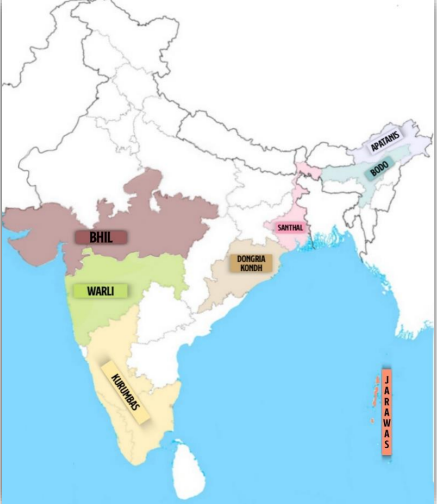
Commonly known as ‘Adivasis’, there are 705 officially recognized ethnic groups in India. According to the Press Information Bureau, GOI; census of 2011 states that 8.9% of the national population comprises of the indigenous people hence India is the second largest tribal population in the world. Some of the lesser-known indigenous groups are the Kurumbas, from the states of Kerala, Karnataka and Tamil Nadu; Apatanis, living in the lower sub-district of Arunachal Pradesh; Warli from Maharashtra; Bodo from Assam and the Great Andamanese tribe from the islands of Andaman, along with the other countless groups which resides in various parts of our country with pride.

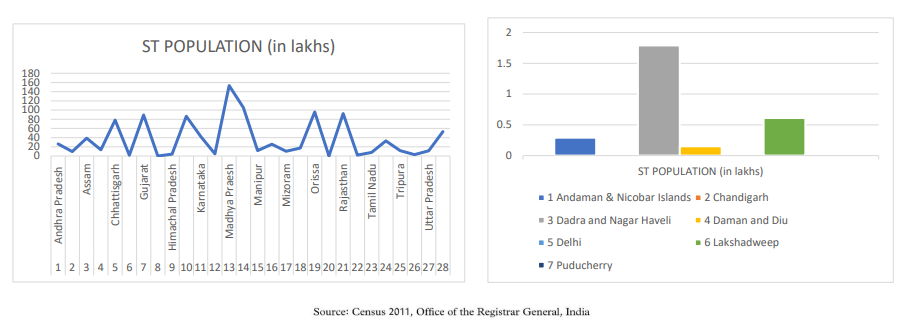
Madhya Pradesh, Maharashtra, Orissa, Rajasthan, Gujarat, Jharkhand, Chhattisgarh, Andhra Pradesh, West Bengal, and Karnataka are the State having a larger number of Scheduled Tribes These states account for 83.2% of the total Scheduled Tribe population of the country. Assam, Meghalaya, Nagaland, Jammu & Kashmir, Tripura, Mizoram, Bihar, Manipur, Arunachal Pradesh, and Tamil Nadu, accounting for another 15.3% of the total Scheduled Tribe population.

PAST AND PRESENT OF THE GROUPS

GLIMPSES OF THEIR PAST:

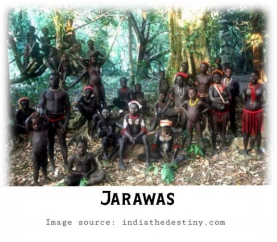
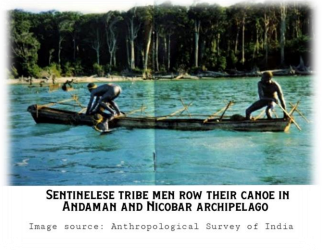
A brief information about their history is given below-Origin of Indigenous groups, according to Wikipedia-Though claimed to be the original inhabitants of India, many present-day Adivasi communities formed after the decline of the Indus Valley civilization, harboring various degrees of ancestry from ancient hunter-gatherers, Indus Valley civilization, Indo-Aryan, Austroasiatic and Tibeto-Burman language speakers. Only tribal people of Andaman Islands remained isolated for more than 25000 years. Tribe in India are characterized by their discrete lifestyle but unlike Dalits, Adivasis were not held to be intrinsically impure by surrounding populations. In the ancient and medieval era, they often enjoyed autonomy and would enhance their hunter- gatherer and farming economies. In some areas, considering Adivasi approval and support were important for the rulers. There are references to alliances between Ahom kings of Brahmaputra valley and hill Nagas. The independence or the autonomy of the groups were disturbed by the invasion of Mughals in the early 16th century. Many rebellions were fought against them by the groups. During British period (1857-1947), colonial administration by the British brought upon the tribes led to many resentments and conflicts among them. Talking about the history, there is a tribe which is the most isolated in the whole world, The Sentinelese and the Jarawas. They are known for their violence and unwillingness to communicate with any outsiders. They live in parts of South Andaman and Middle Andaman Islands and their present numbers are estimated at between 250-400 individuals. As being the most unknown to us, these tribes are under lot of researches and studies. Various movies are made on them to widespread their existence. Here we would mention about, an Indian anthropologist, Madhumala Chattopadhyay who along with her colleagues was successful to make peaceful contact with the Sentinelese people, who are the most dangerous tribes of all time.

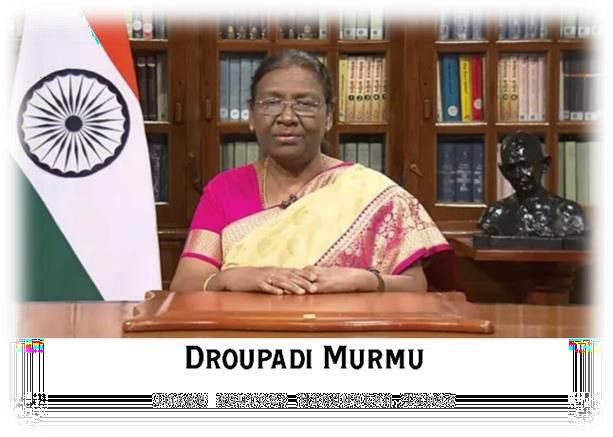
After knowing the unknown, we would like to mention here the oldest tribe of our country, Santhal tribe. The community is largely concentrated in the states of Odisha, Bihar, Jharkhand and West Bengal. It is also the third largest Scheduled Tribe community in the country after the Gonds and the Bhil. Our respective president, Droupadi Murmu created history being India’s first tribal president. Their primary occupation was agriculture and members of the community worship nature and follow their own religion, Sarna.

REVOLUTIONS FOR THEIR EVOLUTION:

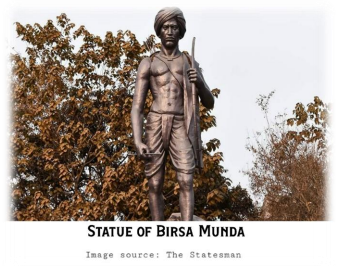
The indigenous people are the ancient inhabitants of the land. They survived on the natural resources and safeguard their inherited realm. During the British reign in India, many revolts & protests were made for the protection of their land. The British imposed taxes on the Tribal lands and restrictions were forced on forest products. Birsa Munda, a freedom fighter from the Munda tribal community, is a hero of the nation who rebelled against the British for exploitation of their land. Some among the tribal communities who took a step and revolted against them: Bhil Uprising (1818), Munda Uprisings (1894), Khond Rebellion (1837), Santhal Rebellion (1855), Ahom’s Revolt (1828), Naga Movement (1905).

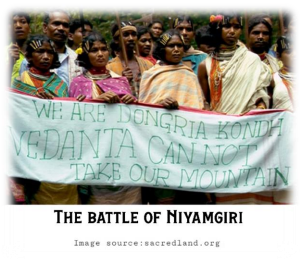
Bhil, a tribal community spread over the states of Gujarat, Chhattisgarh, Odisha, Madhya Pradesh and Rajasthan, were among the first, who revolted for the jarring behaviour of the British, who denied their forest rights. The Santhal Rebellion led by the Santhal tribes, who constitute the major tribal population of Jharkhand, Bihar & West Bengal, are the oldest inhabitants. They protested to end the revenue and the zamindari system started by the British East India Company. In the year 2004, The Battle of Niyamgiri fought by the Dongria Kondh tribe who lives in the Mountains of Niyamgiri in Odisha, powerfully protested against the mining of Bauxite in their hills by a foreign company.

PRESENT PICTURE:

India has several laws and constitutional provisions, such as the Fifth Schedule for central India and the Sixth Schedule for certain areas of north-east India, which recognise Indigenous Peoples’ rights to land and self-governance. The laws aimed at protecting Indigenous Peoples have numerous shortcomings and their implementation is far from satisfactory. According to the 2011 census, Madhya Pradesh has the highest

number of tribes followed by Odisha. As per their political position, Lok Sabha has 47 seats for the scheduled tribes and 84 seats reserved for the scheduled castes.

The present circumstances of these aboriginals are improving due to support from Various organizations and also as a result of their revolt in the past. IWGIA, an international organization which encourages the right of the Indigenous people around the globe. The Govt. of India, under the Ministry of Tribal Affairs, formed TRIFED, a communal body for the trading of products produced by the tribal people at a fair price. HRDS INDIA, an NGO which was developed for the protection and progress of the tribal people. In 1994, the UN General Assembly decided to celebrate August 9 as the International Day of the World’s Indigenous Peoples.

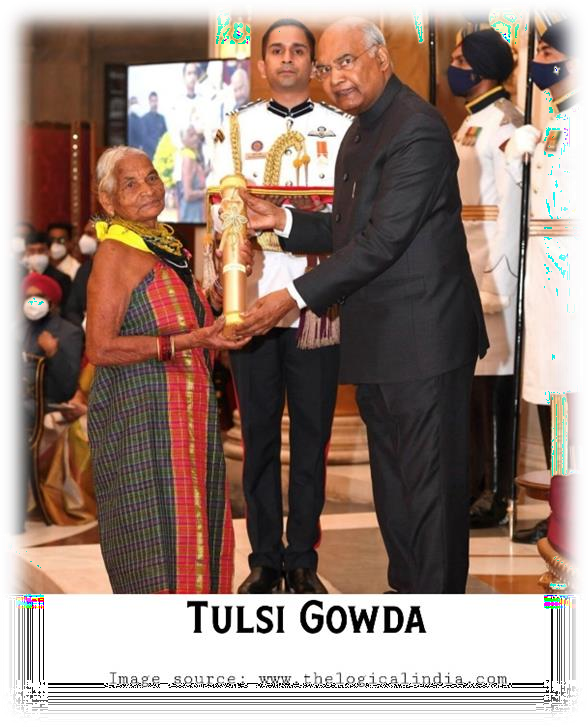
Irrespective of all the struggles and hardship, these Native people have gone forth and joined hands in leading the Nation. This took a big step, when Droupadi Murmu from the Mayurbhanj, a tribal- dominated district in Odisha was announced the president of India. She faced many obstructions and suffered many losses during her journey to get to the highest constitutional post of the nation. From the primeval time, the tribal community is safeguarding the nature. To glorify their effort, last year the Govt, awarded the Padma shri to a 72-year-old woman, Tulasi Gowda, belonging to the Halakki tribe of Karnataka for her contribution in protecting the environment.

HARDSHIPS THEY FACE:

The indigenous groups have faced a lot of problems ever since they came into existence. From the very beginning, they are facing hardships on various aspects of life. Some of the major issues and hardships faced by the indigenous people are enlisted below:

-Discrimination against Indigenous women

-Witch hunting

-Violations of the rights of Indigenous people by the security forces and armed opposition groups

-Non-restoration of alienated tribal land

-Conditions of internally displaced people

-Repression under forced laws

-Economic vulnerability

FEW APPROACHES OR STEPS FOR BRINGING THE MEN OF LANDS OUT OF THE CAVE-

INCREASE IN NUMBER OF REPRESENTATIVES:

No doubt, the state along with the government are trying hard to make our aboriginal natives close to us by making various policies and rules for protecting them from any kind of invasions. The main thing to focus here is that they should be involved enough for the decisions made regarding them, as they know in detail how their habitat or community works. We have to ensure that we are encouraging them to come in the front rather than interfering or invading their lands. For this we have to provide them such opportunities and platforms so that they are able to speak about their demands. Not only through political organizations, but various social representatives who are eligible enough to act as a communication medium between the groups and the country are required. The main barrier which comes in between the communication is the language barrier. For overcoming this restraint, we have to sensitively deal with the cultures and heritage of the groups. Translators or messengers who are trustworthy and can be relied regarding enlisting demands or suggestions of the tribals to the officials. We have to give them appropriate platforms so that the people themselves can make changes for them, suggestions or decisions should be taken from the groups itself, as no one know their nature better than they do. So, the rules, policies or changes which are imposed for them should be of their choice and not enforced on them. This would bring a sense of equality and dignity to the groups which further would help in gaining their trust and cooperation. We can help them grow holistically by providing free education and facilities to the groups as an encouragement for their future generations.

Along with education, the facilities will help the families in various ways and contribute to their welfare. If they become highly educated and knowledgeable, the days are not far when they will seize each opportunity they get and contribute to the society. We have to keep in our minds that as they are possessive for their habitat and culture, so we have to take this step very patiently and considerably. We have to see that the rules or policies which are made for them, are strictly followed or not. More number of supervisors from the groups itself will help the officials or organizations to identify the issues, rectify and then function in a more effective way. It is necessary to make them understand that the decisions or steps taken are in favour of their culture and habitat without causing any harm to them and work with the morals of their welfare and betterment solely.

USE OF SOCIAL MEDIA AND CINEMATOGRAPHY OR DOCUMENTARIES:

In today’s world, the strongest channel of mass communication is social media. Each and every person now has the whole world in his pockets due to the availability of electronic gadgets connected to networks and broadband. Whenever a video or post is shared online the feedback received and the speed of sharing of the content, is just a matter of time. Social media acts as a major medium of spreading awareness and knowledge if used with the same intention. Composition of various videos, short movies, films, documentaries on the lifestyle or culture of indigenous groups can help strengthen their existence to the newer and upcoming tech savy generations. The culture of going to a library and reading any book for gathering knowledge and awareness has decreased during these times. So, it’s better if the tools we are using for mass communication are the most common ones being easily accessible and social media is one of them.‘Bhediya’ a Bollywood movie, which is based on the tribals of Arunachal Pradesh and their nature is recently released. We need more such contents and creations not only in movie theatres but in the OTT setups, television setup, documentaries or web series on their past, present and future. We have to encourage them to come in the forefront by using these tools too. Providing proper resources and motivating them to proudly present their cultures and practices in front of the whole world can help them become “updated” socially, not just only in Facebook.

We can conduct various online contests of forming contents, short stories, reels or documentaries on their life and based on their views or feedbacks we can provide prizes. We can involve them more in the film industry by broadcasting their culture and heritage by their help only, it would be a matter of pride for them too to present themselves and become their own brand ambassadors. Making various songs using their traditional instruments regarding their lifestyle and cultures, featuring them itself in the music videos for making them famous are small steps which can be taken. Here, we would like to mention such two such initiatives; Niranjan Kujur’s DIBI DURGA, a short film based on a day in the life of an indigenous woman (from Santhal tribe in the Purulia district of West Bengal) and Director Priyandan’s DHABARI QURUVI which is the first film in Indian cinema to only star indigenous people. The movie had its world premiere in the Indian Panorama section at 53rd International Film Festival of India in Goa on 25th November. We need these types of more initiatives which would give the Indigenous India a voice through the visual medium.

The youth is the backbone of any country and for drawing the attention of today’s youth there is no better platform than social media. We have to focus on showing what is the originality of

aboriginal natives through various AV aids so that the upcoming generation of the country would work hand in hand be it of the major populations or the indigenous populations.

UPHOLDING THEIR CULTURE AND TALENTS INFRONT OF PEOPLE:

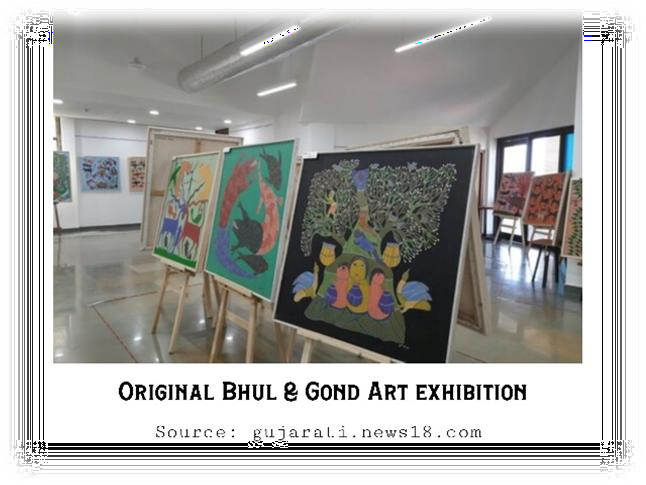
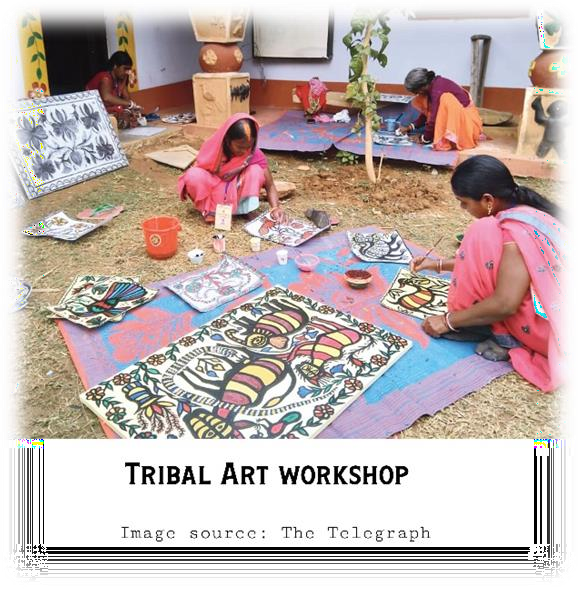
Being the people of their lands and ancestral roots, they have vast culture and heritage of themselves. Their skills and handicrafts set an example for being vocal for local as per our respective prime minister Shri Narendra Modi ji. Not only their handicrafts should be appraised but it can be a source of their income too. Tribal paintings depicting their life stories, their miniature works, handicrafts, woven clothes etc. should be known to the country on a large platform. Conducting various events or Melas so they can showcase their talents or culture can help enhance their cultural as well as socio-economic status. In many places, during festivals or seasons various Melas are being organized in which talents of these people are showcased. One of them the ‘Hastashilpa Mela’ conducted every year in West Bengal mostly in the months of November and December. Here main thing we would point out that these melas or events organized should be held keeping all the geographical, weather forecasting, transportation and communication factors in the minds prior. This would result in avoiding the potential mishaps due to any sudden calamities. Various reality shows for them, then talent hunts, exhibitions should be organized and broadcasted so the whole world can know about their uniqueness and existence. One recent highlight of such an initiative is an exhibition held on 30th September to 3th October in Gandhinagar, Gujarat forecasting the Bhil and Gond original tribal paintings. Showcasing the skills and talents they have will enhance their sense of dignity in the present world. We can also provide rewards and incentives to the ones organizing such events so that even they get recognized for their humble work. Educational tours and visits to such exhibitions, huge number of involvement of students, participation of local people and then usage of their handwork will result in the success of such initiatives.

The more the people come to know about their talents and creations the more they will indulge in using them for different settings of life like decorations, workshops, clothing, cosmetics etc. Not to forget their handicrafts and creations can even be distributed through means of online shopping beyond borders, as per the modernization and globalization going on.

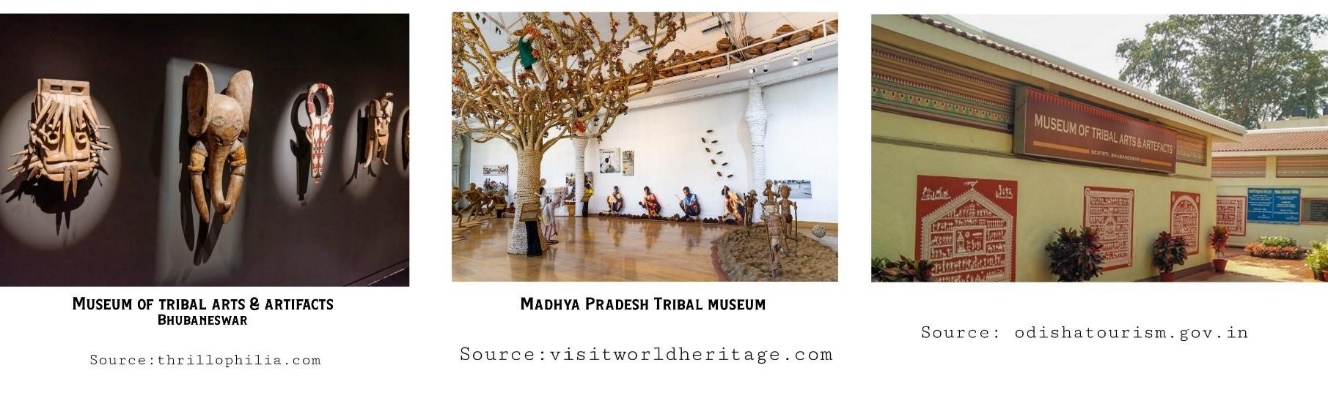
Museums can also act as a showcase of creations of the indigenous people.

IDOLIZING THEM FOR SUSTAINABLE DEVELOPMENT:

Who would care and protect the nature and its resources more than the people of the nature itself. As per UN, the Indigenous communities make up less than 5 percent of world’s total population, but they protect more than 20 percent of land and 80 percent of its biodiversity.

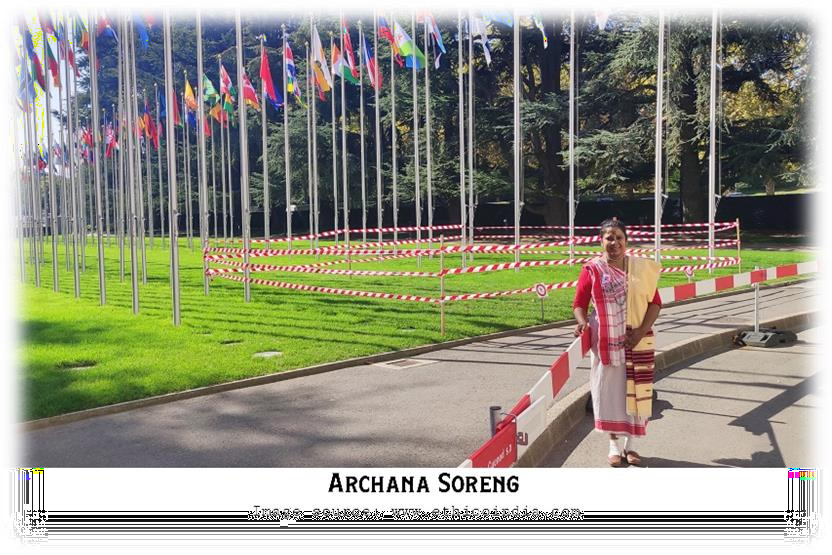
The Aboriginal folks have requisite forces for the conservation of the ecosystem. They utilize nature for their living and also to protect its allure. They set notable example how to achieve the goal of sustainable development – a balance of the necessities in present and for future. Exploitation of natural resources have escalated in past years which has remarkable effected climate and lifestyle. Archana Soreng, a 24-year-old woman from Odisha, is a member of the Khadia tribe who has been appointed to UN Youth Secretary Group for advising on climate change. Their work and accomplishment must be spread around the globe through various printed forms and social media, so that people can come forward and join hands with them to save our mother nature.

The way they stay fierce and protective when it comes to their environment and nature isan eye opener and a big example of how we should protect our mother earth. If we inculcate their morals and principles of saving the environment and use sustainable techniques for growth, it would be the real meaning of protecting the nature. Their strong principles and morals could be used as themes for various meets and conventions. Based on the themes upcoming projects and ideas could be made with an intention to save our resources for present as well as the future generations.

In the lower classes itself when the children are introduced with the topic of ‘Sustainable Development’ in respective subjects be it Geography or Environmental Studies there itself the importance of Indigenous groups in saving the nature should be highlighted. Even they understand how the resources should be utilized in such a manner that it is enough for the future generations, which is a big example in front of the mankind. The smallest ways of using the fuel efficiently, the greeneries, the natural fertilizers, using the abundant sunlight available to us, tree shades, banana leaves and coconut leaves for curing burns, using turmeric or similar natural products for enhancing healing and repairing; these small changes which should be brought in the limelight and to be informed well to the country especially the urban area. There is a trend of intaking or using everything organic in the posh population of our country, we might take this as an advantage to introduce more such remedies and usage of minimum but adequate resources.

EXPANDING THE TOURISM SECTOR:

There is nothing more mesmerizing than the scenic beauty of green lands, mountains, waterfalls and forests. That aesthetic feeling of being detached and away from the sounds or noise of traffic, industries is everything nowadays people look for spending leisure time or vacations.

Getting to know the original nature without disturbing them or interfering and just being a recipient of the hospitability of the indigenous groups of people is something we should try to achieve. Most of the tribal areas are situated in beautiful green forests with abundant wildlife and flora. Being possessive for their habitat, they fear the involvement or interference of outsiders. They think this would lead to disturbance of their daily life and see this as a big disregard. Overcoming this situation would be difficult but not impossible. The tourism sector before planning or setting tourist spots in sensitive areas, should first ensure the groups and gain their confidence that our main intention is just to explore the scenic beauty of their habitat, not about disturbing or causing destructions to their nature or heritage. The Ministry of Tourism sanctioned a project on February 2016, “Development of Tribal Circuit: Jashpur- Kunkuri- Mainpat- Kamleshpur- Maheshpur- Kurdar-Sarodadadar- Gangrel- Kondagaon- Nathiya Nawagaon- Jagdalpur- Chitrakoot- Tirthgarh in Chhattisgarh” under the Swadesh Darshan Scheme.

We need to arrange more excursions, expeditions, tours, trekking camps to educate the enthusiasts regarding their heritage buildings. Yes, the point to mainly highlight here is that we have to make sure the tourist spots are not being littered by the tourists. This responsibility of respecting their heritage and not making it a place of mere selfie spot is ours as the citizens along with the care takers or trip organizers. We have to keep in mind that those heritage and historic places are homes of the aboriginal natives and treat it in the similar manner. Groups residing in the isolated islands of be it Andaman or Maharashtra, they need to be identified and brought in the front with glory. We have to keep in mind not to rush into anything, consent for coming and exploring into their habitat and heritage is very important. The way we approach and make them understand what is our intention, will be the way they will perceive us and respond in the similar manner.

These were some of the suggestions or modifications we would like to have in our society regarding the culturally rich natives of us. We have above suggested some very basic level ideas according to the current situation of our society. Most of the topics are known but only to people who try writing paper like this and to the eminent experts, we would like that this vast topic is brought in front of each and every citizen, introduced to the school going children in the early stage itself so that there is no discrimination in the future and we all together would be able to create a beautiful place to live in. Just as the spelling tells too, our Indigenous are Indians too, they are our own people, our aboriginal natives, we have to give them that place of dignity and respect so that they don’t keep themselves isolated from us too. We have above suggested some very basic level ideas according to the current situation of our society.

REFERENCES

  1. The total paper would be impossible to complete without the below stated references and guidance-
  2. https://en.wikipedia.org/wiki/Santal_people
  3. https://www.deccanherald.com/national/a-brief-history-of-the-santhal-tribe-1129883.html https://en.wikipedia.org/wiki/Madhumala_Chattopadhyay
  4. https://edtimes.in/the-reason-why-the-sentinelese-andaman-tribe-is-so-hostile-and-isolated-is-this-creepy-britisher/
  5. https://engelsbergideas.com/essays/spoken-history-the-modern-importance-of-indigenous-cultures/?gclid=EAIaIQobChMI- 86uiPCK_AIVCB4rCh3caAwzEAAYASAAEgJQgfD_BwE
  6. https://www.iwgia.org/doclink/iwgia-book-the-indigenous-world-2022- eng/eyJ0eXAiOiJKV1QiLCJhbGciOiJIUzI1NiJ9.eyJzdWIiOiJpd2dpYS1ib29rLXRoZS1pbmRpZ2Vub3VzLXdvcmxkLTIwMjItZW5nIiwiaWF 0IjoxNjUxMTM5NTg1LCJleHAiOjE2NTEyMjU5ODV9.jRnv3PeantfRZtJg4jph8xdshK5Mh25Z3hlcPs9As_U
  7. https://en.unesco.org/indigenous-peoples
  8. https://gujarati.news18.com/news/gandhinagar/bhil-and-gond-art-paintings-representing-tribal-culture-exhibited-at-iitg-abg-local18- 1258836.html
  9. https://tribal.nic.in/ST/Statistics8518.pdf
  10. https://www.ethicoindia.com/tribal-activist-archana-soreng-is-indias-new-hope-for-a-greener-world/https://thelogicalindian.com/trending/tulsi-gowda-padma-shri-31801 https://pib.gov.in/newsite/PrintRelease.aspx?relid=183436
  11. https://hrdsindia.org/
  12. https://en.wikipedia.org/wiki/Tribal_Co-operative_Marketing_Federation_of_India https://www.iwgia.org/en/
  13. https://www.ritimo.org/Claiming-Niyamgiri-the-Dongria-Kondh-s-Struggle-against-Vedanta https://byjus.com/free-ias-prep/tribal-uprisings-in-18th-and-19th-centuries/ https://www.un.org/en/climatechange/voices-of-change-archana-soreng

T Resources for Teaching-Learning Process- Dr. Dinesh Kumar Gupta

0
WHAT IS LANGUAGE TECHNOLOGY ?

ICT Resources for Teaching-Learning Process

Dr. Dinesh Kumar Gupta Assistant Professor,Agrawal Mahila Teacher’s Training College, Gangapur cityDistt.- Sawai Madhopur (Rajasthan) 322201Mail: dineshg.gupta397@gmail.com
Mobile: 9462607259

Abstract

ICT is a big buzz word for its use in education. A lot of emphases is on the integration of ICT technologies in the teaching-learning process. Consequently, the teaching learning process is shifting from chalk and talk to online mode. The pandemic COVID-19 exponentially accelerated this process in education. But this also created a lot of hitches in front of the stake holders, the paper presents a wide-ranging overview of the use of ICT in the teaching-learning process. It also discusses abundant digital tools which can be used to make teaching learning more effective.

Keywords: ICT Resources, Teaching, Learning, Process.

Research Article

The exponential development of technology and easier access to information has brought tremendous changes in the social, political, economic and educational fields. This change further accelerated due to the Covid-19 pandemic. The pandemic brought the whole world to instil, including education. That’s why the use of digital technology in education has already gained acceptance. The need is to educate the teachers, students, parents and school administrations to manage the new technologies, become able to solve the problem with the help of technologies and make a decision. This has tipped the balance between skills and knowledge slightly more in the direction of skills, particularly problem solving and thinking skills. The teachers, researchers and experts in the field of education are continuously putting their effort to raise the standard of the student’s achievements in their learning process by examining how students learn effectively. To deal with the sudden transition from face-to-face teaching mode to online teaching mode, the institutions have developed some alternative plans, under the guidance of various agencies like the ministry of health, MHRD and UGC, etc. The UGC has issued guidance to conduct online classes smoothly in which UGC suggested reducing the curriculum, flexible timing of online classes, alternative ways of assessment and evaluation. The teacher education institution also shifted to online mode. At an earlier stage, most of the teachers were not prepared to deal with such a situation because they were not skilled enough to use online platforms for the teaching-learning process (TLP). Universities organized several workshops, short-term courses and webinars to train the teachers to harness the opportunities in this diverse situation. These initiatives play a significant role in enabling teachers to utilize online resources fruitfully. As we know the Covid-19 pandemic pushed the teachers to the limit in every aspect of life but the leverage of technology, especially digital technology, provides learning continuity when the students cannot be present in the classroom (Anna Dabrowaski, 2020). However, there are several barriers to the success of the online TLP ranging from teachers’ and students’ preparedness, easy access to the online resources and devices and student support at home.

ICT Resources

ICT is a diverse set of technological tools and resources used to communicate and to create, disseminate, store and manage information”. According to National Policy on ICT in School Education (2012) “ICTs are defined as all devices, tools, content, resources, forums, and services, digital and those that can be converted, into or delivered through digital forms, which can be deployed for realizing he goals of teaching-learning, enhancing access to and reach of resources, the building of capacities, as well as management of the educational system. ICT tools can be employed to improve the learners’ ability of understanding. GarcíaValcárcel (2014) goes so far as to say that the ICT becomes the channel for communication and information that is essential for guaranteeing learning environments that are open, interactive, replete with incentives, sources of information, motivating for students, and focused on developing skills. The use of ICT as a resource of TLP has the following functions:

1. It promotes, arouses and maintains the learner’s interest.

2. It enables the learner to organize information, create new knowledge, link the knowledge and apply it to new situations.

3. Provide an environment for learners to create and express ideas.

4. It guides the learners’ learning.

5. It provides the opportunity for learners to assess knowledge and skills.

6. It provides an environment for observation, exploration and experiments with simulation, animation and videos.

ICT aids are employed in the teaching and learning process, it involves most of the sensory organs of students and also makes learning more real to students (Abdulai & Akaglo,2020). In Edgar Dale cone of experiences, the cone shows the progression of learning experiences from concrete to abstract rather than as a prescription for instruction with media (Lee & Reeves,2007). Edgar Dale introduced the modern media in education, postulated the “Cone of Experience”. The arrangement of Dale’s cone of experiences is not based on difficulty level but abstraction and also several senses involved in learning. The cone of experiences can be categorized into 11 stages starting from concrete experiences at the bottom of the cone and becoming more and more abstract as we move upward to the peak of the cone. Thus, the moving from verbal symbol (Peak of the Cone) to direct and purpose experiences, the degree of abstraction gradually decreases and learners become more participative Edgar Dale’s cone experience recommends more learning from reality, simulation and various types of active and experiential learning (Lee & Reeves,2007; Abdulai & Akaglo,2020). The ICT resources use multiple senses in the formation of experiences. The selection of these resources or tools is responsible for bringing a change in the classroom environment. The availability of a wide range of such teaching-learning material will catalyze the transformation of classrooms into ICT-enabled classrooms. Therefore, the teacher must be competent enough to select and critically evaluate digital content and resources. Initially, the teachers may start with the computer lab, later on, more classrooms can be equipped with appropriate ICT resources making way for ICT-enabled classrooms. ICT Resources for the TLP The development of digital technology provides an abundance of ICT resources and tools to enhance the teachinglearning environment. Various ICT resources can be analyzed based on their use in the TLP. The ICT can be categorised as:

• Informative resources

• Collaborative resources

• Learning resources

• Resources for assessment and evaluation

• Resources for professional development

ICT as an Information Resource

The use of ICT has become increasingly important in academics and most of the academic activities are switching over to ICT-based resources and services. It has opened new avenues like online learning, e-education, e-journal, CDROM Database, e-books, web-based resources, etc. (Singh, Krishna & Jaiswal, 2014). The major resources of learning before the invention of digital resources were libraries only. The development of ICT-based technologies forced most libraries, not only in India but all over the world to go online and become a rich source of information. The National Digital Library of India (NDLI) is a huge resource of digitally available learning resources written by millions of authors across various subjects in different languages. The National Repository of Open Educational Resources (NROER) is another huge resource of learning materials for school and teacher education. Similarly, DIKSHA (Digital Infrastructure for Knowledge Sharing) also considered as One Nation One digital Platform is a storehouse of educational resources which is available as a portal and app as well for easy access to all. This highly developed digital environment provided a scenario to teachers and learners with ample flexibility and an abundance of learning content and direct access to it. The internet enables the teachers as well as learners to find out additional information to address a topic from basic to advanced levels. For example, if you search ‘teaching and learning’ on Google, you will get billions of pages in less than one second. Thus, the internet becomes a huge resource of information. Online databases are also some other ICT resources that provide information.

ICT as collaborative resources

The learning environment depends on engagement among stakeholders. No engagement means no attention, no attention leads to no effective instruction, no effective instructions lead to no sufficient development regardless of whether the technology is used or not. The learning environment can be enhanced by the collaborative learning process. The collaborative learning approach involves teamwork and is based on the constructivist theory of learning. The constructivist theory of learning refers to the learners constructing their knowledge upon the foundation of their previous learning. This type of learning has many academic, psychological and social benefits. Collaborative learning is a way of constructivist learning and it encourages students to see situations from different perspectives, creates an environment where they can practice social and leadership skills (social benefits) and provides a satisfactory learning experience that significantly reduces anxiety (psychological benefits) (García-Valcárcel, 2014). Collaborative learning works very efficiently with ICT; it places the learners in the process of generation, managing and sharing of information by interaction with each other in a virtual community driven by ICT resources. Thus, collaboration is the cornerstone for the success of technology-enhanced learning in the classroom. At this time, most of the learners use the internet through their smart mobile. Therefore, most of the social networking sites, the forum moved to inform of the app. Face book, Whats App, Google classroom, Edmodo, YouTube, email, blogs, wikis are some of the examples of collaborative tools in the TLP. The Edmodo and Google classrooms are very easy to use among all collaborative resources.

ICT as a learning resource

ICT learning resources offer the possibility of acquiring knowledge, attitude and procedure during the TLP (Gonzalez, 2011). ICT can supplement learning activities by using several ways, such as digital educational resources, interactive tutorials, simulation, eBooks and open knowledge reinforcement exercises. ICT-based learning resources provide a lot of teaching-learning materials created by teachers, educators, experts, researchers and learners. Interactive tutorials provide enriched learning materials with pictures, animations, simulations and videos. The most interactive resource for learning can be simulation. The simulation is a type of modelling that provides an opportunity for the learner to engage in the construction of knowledge and experiences by experimenting with the model. Thus, the simulation provides a constructivist environment in which the learner learns the thing by “learning by doing approach”. Just as children do simulation activities by role-playing, adults use computer simulations to understand complex systems, real situations or dynamic processes. The simulation model is very useful for science subjects. The virtual laboratory allows the learners to perform experiments from anywhere at any time without using the actual laboratory (Bajpai, 2013). The educational electronic books (eBooks), audios and videos, podcasts are other digital resources that enable learners to enhance and create their knowledge (Gonzalez, 2011). There are various e-resources where anyone can find a large number of e-books, videos and audios on different educational subjects. E Pathshala, a digital initiative of NCERT provides a large number of eBooks, videos, audios and other educational resources for students, teachers, parents and researchers.

ICT as resources for assessment

The term ‘assessment’ in education means the procedure that is used to collect information about the knowledge, attitude and skills of a learner. Based on the assessment, the teacher judges the student and gives feedback on their progress, strength and weakness. Thus, the assessment plays a vital role in the educational process. The rapid development of ICT in education enables the teachers to use different technologies and their applications to assess the students’ progress. ICT-based assessments can be various types i.e. computer or laptopbased and mobile device-based. With the help of ICT, a teacher can assess the students’ performance in different formats i.e. text, image, audio, video and simulation-based.

• Computer-Assisted Assessment or Computer-Aided Assessment (CAA);

• Computer-Based Assessment (CBA)

Computer-assisted Assessment

Computer-assisted assessment refers to the use of a computer to facilitate, manage and support the assessment and evaluation of the learners’ progress. A teacher can use CAA at any stage of the TLP. CAA is mostly used for scoring multiple-choice questions and questions with short-answer responses using an optical mark reader (OMR). The CAA can be used to identify the learners’ difficulty in the subject of trends and patterns within the learners’ group. It can be also used diagnostically to identify students who would benefit from extra direction or support.

Computer-based assessment

Computer-based assessment (CBA) is generally done by the computer. It is used mostly in digital tools for assessment-related activities. It can be used for summative, formative or diagnostic purposes. This type of assessment includes multiple-type questions (MCQ), other objective type questions, essays and short answer questions. This type of assessment can be used from anyplace and anywhere with laptops, tablets and smart phones. This type of assessment is an integral part of e-learning teaching and training. For example, the assessment tools of google classroom are computer-based assessments. The concept mapping tools are also part of it.

ICT as a Resource for Professional Development

The professional development of the teachers is another important factor that can influence the teachinglearning environment in the classroom. Professional development means the acquisition of skills for personal and career development. There are various courses such as in-service and pre-service courses, designed for the professional development of the teachers. Ahmad & Chopra (2015) emphasized that the teachers have to be fully equipped to integrate ICT in their pedagogy. For this, they need extensive training on how to use ICT in their TLP. The pandemic COVID-19 also established the fact that teachers need a Continuous Professional Development program on ICT integration in TLP. The enhancement of ICT especially, MOOCs provided the opportunity to design and develop tailor-made courses for career advancement. Different institutions and organizations developed and are developing a large number of courses according to the needs of the learners. There are various platforms that provide these courses either free of cost or on nominal fees such as Coursera, edX, Udacity, Ivercity, NovoEd, Udemy, SWAYAM, etc. The SWAYAM is developed by the Government of India, which provides a platform of learning for various courses of school education, graduation, postgraduation, professional education of different streams. Besides this, the teachers can also use BLOGS, social sites, social bookmarking, podcasts and YouTube to share ideas, opinions and understanding of any topic.

Final discussion- The COVID-19 shifted the whole education system online. This sudden shift created a lot of problems in front of the stakeholders of education i.e. teachers, students, parents and school administration. Where it created a lot of problems, it also provided the solution to various problems. Due to this online education, the TLP has been continuously moved on. But the use of technology in education gives us some lessons also, such as;

• No technology is a panacea for education- Most current, capable digital technology resources do not offer quick easy or universal solutions for educational problems. The digital technologies, materials and strategies are usually tools in a larger system and must be integrated carefully with other resources and with teaching activities. The pandemic COVID-19 forced stakeholders of the education system to shift to digital technologies for continuing education. But the overuse of digital technologies can create more problems than the solution provided by it in education. Judicious and realistic planning is necessary to harness the potential of digital technologies in education (Roblayer, 2011).

• Teachers usually do not develop the teaching materials and curriculum- Teaching is one of the most time and labour-intensive jobs in society. Generally, the teachers do not develop software or create complex technology-based teaching materials. Most of the time the companies, personnel in funded projects at different levels develop the learning materials. This is one of the most crucial issues in the field of digital education. Because those developers develop the learning materials by generalized needs. Therefore, these learning materials fail to cater to the local needs. Unless teachers are not involved in the field of material development, the local needs will always be left out.

• Technically possible but not equally desirable and feasible- A popular saying is that today’s technology is yesterday’s science fiction. But science fiction also shows us that technology brings undesirable as well as desirable changes. For example, ICT has allowed attending professional conferences online, rather than travelling to another location, but it is also correct that people continue to want to travel and meet face to face (Roblayer, 2011). Human cloning is technologically possible but not acceptable in society. Technology demands us to become a critical consumer of its power and capability and also decide which science fiction can become reality.

• Things change faster than teachers can keep up- The resources and methodologies of teaching are changing continuously. Technological development further accelerated this change. Gone were those days-if, indeed, they ever existed, when a teacher could rely on the same handouts, homework, or lecture notes from year to year. It is very difficult to predict the new technological development in the field of education but it would be different from the present. That’s why, the teachers must anticipate and accept the inevitability of change and the need for continual investment of their time (Roblayer, 2011).

Conclusion- The development of ICT technologies changes the teaching-learning environment. The teaching-learning process is now moving from traditional chalk and talks to an ICT-enabled environment. The real change in classroom teaching will be visible when the teachers will be able to integrate the ICT in every spare part of the TLP, whether it is an objective formulation, contents selection and methodology of teaching or evaluation in the classroom. A good education depends upon the good teacher, in the same way, the effective integration of ICT in the TLP depends upon the teachers with good ICT skills. There are various ICT resources especially, MOOCs which provide tailor-made courses for teachers’ professional development. Besides this, Blogs, digital bookmarking, simulation tools, podcasts, YouTube, etc. provide the opportunity for the teachers to develop their professional skills related to a different field. Thus, the teachers need to keep themselves upgraded with new ways of teaching. Today is the age of videos and podcasts and children can easily learn through this interactive media and hence teachers of the current era need to keep up with the current technology (Rani & Surana, 2015). A good teacher needs to explore themselves and try innovative educational measures to teach children.

References:

  1. Abdulai, I., B. & Akaglo, E. (2020). Proficiency of Teachers in the Use of ICT in Teaching Social Studies: A Case of Selected Senior High Schools in the Amansie West District in the Ashanti Region of Ghana. International Journal of Innovative Research and Advanced Studies (IJIRAS),7(5), PP-218-226. Retrieved from http://www.ijiras.com/2020/Vol_7-Issue_5/paper_33.pdf
  2. Al-Said, M., K. (2015). Students’ Perceptions of Edmodo and Mobile Learning and their Real Barriers towards them. TOJET: The Turkish Online Journal of Educational Technology, 14(2), pp-167-180.
  3. Bajpai, M. (2013). Developing concept in physics through virtual lab experiment: An effectiveness study. ND Techno Learn: An International Journal of Educational Technology, 3(1), pp- 43-50.
  4. Bhattacharjee, B. and Deb, K. (2016). Role of ICT in 21st Century’s Teacher Education. International Journal of Education and Information Studies. 6(1), pp.1-6
  5. Cacheiro González, M.L. (2011). ICT Resources for Educational Purposes. Education in a Technological World: Communicating current and emerging research and Technological Efforts. (Edt.) Méndez-Vilas. Retrieved from http://www.formatex.org/ict/chapters.html
  6. Dymoke S. and Harrison, J. (2008). Reflective Teaching and learning. New Delhi, Sage Publication India Pvt. Ltd.
  7. Egyankosh.(n.d.) ICT and Assessment (Unit-11). Retrieved from http://egyankosh.ac.in/bitstream/123456789/46312/1/Unit-11.pdf
  8. Ekici D., I. (2017). The use of Edmodo in creating an online learning community of practice for learning to teach science. MOJES: Malaysian Online Journal of Educational Sciences. 7(2), pp-91-106.
  9. García-Valcárcel, A., Basilotta, V. and López Salamanca, C. (2012). ICT in Collaborative Learning in the Classrooms of Primary and Secondary Education. Comunicar, Media Education Research Journal, 42(21), pp-65-74.
  10. Ghavifekr,S., Kunjappan, T.,Ramasamy, L. and Anthony, A.(2016).Teaching and Learning with ICT Tools: Issues and Challenges from Teachers’ Perceptions. MOJET: Malaysian Online Journal of Educational Technology, 4(2), pp-38-57. https://lidtfoundations.pressbooks.com/chapter/edgar-dale-and-the-cone-ofexperience/
  11. Kumar J., A., Bervell B., & Osman S. (2020). Google Classroom: insights from Malaysian higher education students’ and instructors’ experiences. Education and Information Technologies. https://doi.org/10.1007/s10639-020-10163-x.
  12. Lee, S.J., & Reeves, T.C. (2007). Edger Dale: A significant contributor to the field of education technology. Education Technology,47(6),56.
  13. MHRD (2012). National Policy on Information and Communication Technology (ICT) In School Education. Retrieved from https://smartnet.niua.org/sites/default/ files/resources/revised_policy%20document%20ofICT_0.pdf
  14. Rani, S. & Surana, A. (2015). Teacher’s Professional Development through ICT Resources & Gadgets. International Journal of Students Research in Technology & Management, 3 (01), pp 234-240
  15. Roblyer, M. D. (2008). Integrating Educational Technology in Education (Fourth Edition). New Delhi, Pearson Publication.
  16. Singh A., Krishna k.M., & Jaiswal S. (2014). Use of ICT-based Library Resources and Services and its impact on Users: A Case Study of the University of Allahabad. SRELS Journal of Information Management, 51(2), PP- 93–98

TECHNOLOGY REMODELING THE INDIAN PARADIGM- Prince Singhal, Archit Aggarwal

0

TECHNOLOGY REMODELING THE INDIAN PARADIGM

Prince Singhal 
Student, Indian Statistical Institute

Archit Aggarwal
Kolkata Management Consultant, Accenture India

Abstract

India, the largest and most diverse democracy in the world has a fully-fledged political system. Increasing dependence on technology is a welcome step for Indian elections. Today, the technology is democratizing and reshaping means of control in low- and middle-income countries and the political apparatuses are using technology tools to reinforce their agendas. The amalgamation of social media and election campaigning has clearly redefined the face of political movements in India. The political campaigns are reaching a fever pitch in the elections which will be considered a critical juncture in the modern history of the country. Compared to technologically-driven campaigns in other countries, India is a basket case. Rather than reaching out to individual subscribers — as is the case worldwide — Indian political parties has managed to rally voters around advanced technological platforms. Social scientific studies of the effects of advertising in political issues suggest that exposure to advertising makes voters more familiar with the sponsoring candidates, and direct their attention to specific issues or topics which then become the principal yardsticks for evaluating the candidates. Through this paper we are going to study the impact of various factors of technology on the Indian political communication system. The factors include understanding the medium, online property authenticity, consistency, credibility, call to action and grass root movement. Indian politics need to utilize the digital media literacy of the youth of the country to build community digital media systems-public spaces- to communicate political ideologies and views. This paper will study the use of technology in past elections and examine its success and failure in India’s diverse landscape. The paper will conclude with recommendations regarding the use of a modernized version of political communication as a new form of candidate outreach and also suggestions to enhance the use of digital technology as a potent political communication tool in India.

Keyword: technology, diversity, democracy, political, system

Research Article:

IT+IT= IT. Indian Talent + Information technology= India Tomorrow.

Political communication in India is an intricate and complex balance: intricate because it is a logistical nightmare to conduct voting across the geographical and cultural landscape of India, the second most populated country in the world; complex because politicians have to communicate to the largest and most diverse democratic electorate base in the world- a base that consist of voters from 29 different states and 7 union territories that are home to approximately 1 billion Indians. Each state in India has its own language, culture, major religion and certainly, it is on problems. To solve these problems and to better serve the people each state has a numerous parties at the local, district and state level. Given its size and diversity, each state in its own right could be treated as a country in itself.

India has the biggest number of people with franchise rights and the largest number of political parties, which take part in election campaign. The process of election in India is less than perfect. Every year there are news reports about corruption, violence and the exchange of money and alcohols for votes during elections. Dirty laundry and slanderous statements are aired by the dozen. However, what ultimately wins an election is the promise for a better India that motivates the voters to cast their ballot. Before understanding political communication in India and the use of technology in service to politics, one must understand Indian voters and Indian political parties.

In recent times, the most important electorate segment is the youth of India.40% of Indians are under the age of 18 and 70% are under the age of 35. From 1998 elections, the electorate demographic majority has been centering towards the youth.

With such a complex political system and a huge diverse electorate base, political communication in India is difficult. Each tool used has varied effects, depending on the targeted audience and location. To understand the place of digital technology as a political communication tool, it is important to study previous political campaigns and their use of technology.

METHODOLOGY:

The methodology involved collection of facts from government reports, press releases and interaction with people having basic understanding of the election procedure as primary data. The secondary data includes a series of journal articles and newspaper reports on the issue. This data was used to analyze the issue of technology-effect on politics and to come to better understanding of the different perspectives of the same. A detailed study is being done on election methods and political communication in India in the range starting from pre-internet era to internet-era. Statistical mapping and visual data has also being added for a better understanding of the issue. Also a SWOT analysis is being done to identify the strength, weakness, opportunities and threats for the technology usage in Indian politics.

POLITICAL COMMUNICATION IN INDIA:

The most common form of political communication in India is public meetings. Initially used during India’s freedom struggle, this form of communication overcomes two of the biggest barriers of communicating in India: diversity and language.

Up until the 1980s, political communication in India was largely grassroots, door to door campaigns, print ads, graffiti and public meetings. However, the 1989 election introduced the use of technology for mainstream campaigning.

Political parties use radio and television as an effective tool for campaigning. These mediums were used to play key messages and slogans, party songs and symbols and often relayed party speeches. Trucks filled with equipment, known as Video-on-Wheels, showed these video cassettes to villagers that did not have equipment to do so themselves. They were like theatres- on-wheels, often acting as a form of escapist entertainment for the rural population of India who rarely got to view recorded material of any sort. With limited or no other source of information, these people often believed what was being shown to them regardless of whether it was true or not.

Technology can be used as a tool but not as the core tool in a political campaign. Most important, regardless of the tools used, if the voters are unable to resonate with the party’s promises and trust its leader, no amount of campaigning can help win an election.

From 1989 to 2000, the use of technology has been static. Tools such as grass-root, door-to-door, print ads, bill board and television campaigns were being tapped by parties of all statures. What had changed, however, were political messages. They reflected the instability and volatility in India. The country is changing, but the means to speak to her were still stagnant. This would soon change. Old mediums were used with new vigor and new mediums were introduced.

The future of political communication is changing in India. The voters, too, were more informed due to liberalization of media. The newspaper industry is booming and information was being disseminated widely and at a much quicker pace. With a more informed voter base, political strategies of the past were less likely to work. People are actively consuming information, leading to a shift in the way political communication.

THE 2004 ELECTION IN INDIA

2004 National Election is best described by Gopal jaylal N:

“ The Indian parliamentary Election 2004 was an election of many firsts: it was the first Lok sabha election of twenty first century : it was the first election in which the political communication came to be conducted in the corporate vocabulary of image making ,branding &marketing: it was the first election after first ever non congress Government completed a full term in office :and it was the first election after which elected leader of single largest party declined Prime Ministership and nominated another.”

In these elections, political parties turned to Internet and mobile technology – the two mediums that were neither used nor regulated in prior elections. In These elections, India first time used the electron voting machine (EVM) across her length and breadth as compared to previous ballot paper that can be easily rigged. Technology as a tool to ease governance was slowly catching wind with launch of Government websites that helped address citizen problems and actively gave information about elections, voting centers and registration process. If we look for statistics,

Figure 1

In 2004, the serving BJP broke away from this pattern with its aggressive nation-wide ‘India Shining’ campaign. It recruited advertising and PR agencies to manage its campaign, focused on the urban first time voter, advertised heavily on print and television, and also used e- campaigning, to give a facelift to its website, pushing out text messages, pre-recorded voice clips and emails to its database of email & telephone users, and offering campaign related mobile ringtones for download. In spite of its “failure”, BJP’s India Shining campaign has set the pattern for all Indian election campaigns since then: spend 40-50% on print, 20% on outdoors, 15% on TV, 5%-10% on internet and mobile and the rest on radio, film theaters and on-ground activities (Live Mint). BJP’s main rationale was to reach to everyone through all available media outlets with one consistent message: The shining India. It is estimated that BJP called close to 72 million people – 46 million people on fixed lines and 26 million on mobiles. This created a media frenzy. On the other hand , Congress party hired Orchard Advertising and Public relation. They ran slogans like “5 crore jobs were promised ,Aam Admi ko kya mila ?” There were plenty of tools to communicate with audience but all limited to mobile and internet technology. The 2004 election led foundation to use these tools effectively foster interactive communication in the elections to come.

2009 INDIAN ELECTION

Besides change in voter’s mind and politicians’ outlook towards communication, corporate India, too, were aware and pursuing social aware projects during election campaign period. Tata, one of the leading company started Jago re movement to aware voters to vote .

A initiative Vote Report India came into place with having a intention of making our voting system transparent. Google in corporation with Hindustan Times made a page of aggregated content for Indian elections which made easy for everyone to stay informed and get in touch with updates. Similarly Indian news channels, papers , radios even exclusive online news outlet

devoted entire sections on their websites to cover , report and aggregate news on 2009 elections. BJP started paid online advertisement based on the Google search adds and party bought as many as 200, 000 keywords , placement adds across 50,000 websites and banner add across 2, 000 websites. Besides online banner adds , BJP mimicked Obama’s online campaigning ,hoping to recruit 10,000 volunteers through Advani’s website. The thought behind “Advani@campus” was to recruit 100 college students and euip them with publicity material so that they could use to influence and hopefully convert their peers to party’s ideology. “Bloggers for Advani“, join BJP through facebook and Orkut’s profile were managed by BJP supporters.overall BJP’ online strategy was in sync with their campaigning. While Congress had hardly any presence online.

This party still focused on “aam aadmi “ , and emphasized three concepts : secularism , good governance and growth.

2014 LOK SABHA ELECTIONS IN INDIA –

The 2014 Lok Sabha Elections in India as dubbed by CNN can truly be categorized as “India’s first Social Media Elections”. The Political parties as well as candidates in the fray exploited the resources of new media, specially the social media in the process of their election campaigning. There are 815 million people eligible to vote in the general elections; of that figure an estimate over 100 million are registered first time voters and fall under the age of 25, categorized as youth. IRIS stated that out of the 543 constituencies, 160 were high impact zones of the social media and 67 constituencies were identified as medium impact zones, while the rest were classified as low or no impact zones. They were categorized on the basis of internet and Facebook users in each constituency. It concluded saying that the high impact zones have the potential of being the major game changers’ in 2014 elections. Politicians for filling their vote bank were not only accessing social media to network but they are targeting the youth primarily, which this time accounts for an estimated 100 million plus. Social media presence is expected to be a key platform for reaching out to the electorate, especially the youth warming up to exercise their right for the first time Politics. An analysis of the affidavits filed by the candidates of the various constituencies and political parties’ show that most of the candidates, cutting across parties and age groups presence on multiple social media platforms

Figure- 2

Revenue generated by social media and Data analytical companies due to elections has substantially increased perhaps two or three times than ever before.

The Pitch Madison Media Advertising Outlook 2014 estimates, released on 19 February, forecast the digital medium to contribute Rs.3,950 crore (Rs. 39.5 billion or $658.33 million @exchange rate of 1USD = INR 60) in 2014. Most of it coming during elections.

“Online as a medium to reach voters has become a really powerful one for the parties, so spending on digital will only continue to grow,” said Asheesh Raina, principal research analyst at Gartner Inc.

Congress, Law Minister Kapil Sibal , Congress leader and former Union Minister Ajay Maken , Shashi Tharoor , Ghaziabad candidate Shazia Ilmi from the Aam Aadmi Party , BJP Prime Ministerial candidate Modi and AAP Chief Arvind Kejriwal are among the high profile contestants who mostly express their views through the social media, primarily Twitter , Google Plus, YouTube and Instagram .

Aam Aadmi Party (AAP) This party has been successful in utilizing IT & Social Media platform to engage and communicate with their audience about upcoming rallies, events, list of candidates, speeches of their candidates, graphics & videos, and persuasive appeals to contribute & donate for vision of an advanced India through the integration of platforms like Facebook, Google Hangouts, Mobile Apps, Twitter, Youtube, Whatsapp. The videos uploaded on youtube are focused mainly on bringing issues related to corruption and scams into light, speeches from Arvind Kejriwal & other prominent leaders, Hangouts and Questions & Answer sessions with leaders as well as coverage of events & rallies and calls for donations. The Aam Aadmi Party after setting up the Government in the State of Delhi, in January started a free membership drive, wherein all one had to do was send an SMS

(Short Messaging Service) or make a missed call at the toll-free number (7798220033). By the end of the day the campaign was launched AAP already had about 60,000 members registered through the process and thus Arvind Kejriwal put a target to reach 1 crore members by the 26th January 2014. The Party apart from using these tools did not forget those who do not have internet but just a phone, although they may not have been able to attract them much, but SMS messages and telephone calls on festival days with the appeal to vote for the party, were also a major part of their campaign in the initial stages. Arvind Kejriwal has about total of 5 million fans on Facebook. His page has tabs for Events, Donation and Invite. Some of the posts are dedicated to declaring the donations made to AAP, in keeping with the party ideology of honesty and transparency

Bhartiya Janta Party (BJP): The Bhartiya Janata Party in its campaign this season has left no stone unturned in reaching out to the new and existing voters’ population through digital and social media. BJP is approaching the 4 million fans mark on facebook, and has recorded over 7 million views on youtube and more than 45,000 subscribers. The party has a very strong presence on twitter with over 400,000 followers. It uses twitter in a significant manner by using hash tags which are in sync with running campaigns like#ModiForPMFund, #AbkiBaarModiSarkaar, #ChaiPeCharcha. The party also trends on user generated hash tags like #WhyPMModi, #BJPAnthem. The mobile application of the BJP, India 272+ provides an Online Platform where Volunteers can Collaborate, Contribute & Campaign. It also facilitates one-to- one communication with the candidates. The campaign launched a special NaMo Number. An SMS, missed call, or WhatsApp message to 78200-78200 added the user to BJP’s database as a potential volunteer. Campaign sources say they receive an average of 100,000 missed calls on a daily basis, and that the total interactions with people through this service has now hit 130 million-more than half of the campaign’s total outreach. a fleet of GPS-fitted vans, or digital raths, drove to village squares across Uttar Pradesh and Bihar and played clips of Modi’s speeches on 55-inch LED screens. The last, and perhaps most effective tool, was the 3D rallies which started on April 10, one month before the last day of campaigning. Modi’s experiment with 3D holograms during the 2012 Gujarat Assembly elections had got him a place in the Guinness World Records for delivering a speech to 53 locations simultaneously. The hi-tech campaign has taken the Modi wave many miles further.A.

Indian national congress: Following the assumption that ‘it’s never too late’ party joined the social media bandwagon getting more active on their facebook page & twitter handle, reworked their website, YouTube channel , volunteers platform Khidkee , Whatsapp and Line extensions. The congress enjoys over 2 million supporters on facebook. The party’s communication online is aimed at building a culture of positive, polite and dignified engagement over serious political issues.The hashtag #RGExposesBJP & #KattarSochNahiYuvaJosh was launched as a pre cursor to Rahul’s rally. The Youtube channel for Congress has mere 5,000 subscribers, with about 8 million views registered till date. Congress is the only political party to harness Instagram for connecting with the masses at their preferred social media network.

ADVANCEMENTS IN TECHNOLOGY USE IN INDIAN POLITICS(2004 -2014):

Gone are the days when social media platforms were only being used for making social circles and forming connections. The reach and impact of social media has now gone a notch up in India. when it comes to discussing critical or sensitive issues like politics, corruption, poverty and economy social media takes the first position.In 2004 , Shyam Tekwani and Kavita Shetty , in the book “The Internet and National Election” conducted a comprehensive study on the use of internet in 2004 elections, concluded that engagement on most websites was limited to contact forms and rarely provided a option for being a volunteer and to vote. They said that economic

divide between rich and poor , haves and have not , in Indian is wide and recent emerging growth in technology has not help to bridge this gape. Besides the barrier of reach , content was mostly available in English , and only small content was in Indian languages , which limited the reach of

Figure- 3

But in 2009, Advani@campus campaigning recruited 7000 volunteers who were tasked to advertise Advani’s website and social media profiles and translating sections of website into

many different Indian language , designing banner ads and helping in other campaigning work. Moreover there were 54 million computer literate in India in 2004 but that increased to 95 million in 2009 and 243,198,922 in 2014.

Moreover internet once was considered privilege of educated and elite class, it is now available to common man. As it was only one way communication system earlier, later politicians made it open to common man to reply and to register. Initially mobiles were used for making call and texting but later on it was equipped with GPS, cameras and most important internet . Now a days one in every five mobiles is used to access internet.

ANALYZING THE USE OF TECHNOLOGY FOR POLITICAL COMMUNICATION:

In a modern democracy, social networking sites have been used by governments to involve citizens in decision-making, and by civil society to engage people in specific issues. However social networking sites can also be used to broaden political participation by helping citizens to communicate with their representatives and with each other. Here is how social media played a vital role in the most influential elections in India.

  1. Political parties formed direct connection with users:-. Social media was not only a way for our netas to make a difference, but it also gave a chance to people to comprehend each other’s mind-set and influence opinions by sharing knowledge and spreading awareness on a personal level.
  2. Bypassed the mainstream media:-. The dedicated pages and accounts of parties continuously promoted images, videos, important actions/activities to stay connected with their followers, who can get minute to minute updates through their Smartphone when on the move. Through micro-blogging sites like Twitter and Tumblr these parties’ reached out to vast number of voters and pulled them into the conversation apart from updating and educating them.
  3. Helped in boosting the image of politicians:- Just like big brands, politicians also used social media platforms to boost their image. Every time Modi had gone on a rally, there was an update on Facebook and Twitter. Modi is smart enough to know that not everyone has time to attend rallies and campaigns, so his party turned all the offline campaigns into online campaigns and got connected with people who were not a part of their offline campaigns.
  4. Powerful media for the freedom of speech:-Last but not the least; social media is an incredible platform to express your thoughts, share knowledge and spread awareness. When people get the right to express themselves, it becomes easier for politicians to know their interests and inclinations.

Here we’ll look Why technology is affecting Indian Politics

  1. Reach:- India is second largest populated country of world. To reach to 120 million voters of the India is a very difficult which now has become very easy with help of new
  2. emerging technology. New media is decentralized and distinguished by multiple production & utility points.
  3. Accessibility:- Social media tools and networking sites are available for use of people at little or no cost.
  4. Usability: Present social media does need the skills of being aware of basic usage of computer & internet, hence can be used by anyone with access to the new media.
  5. Immediacy:- The previous methods of campaigning use a longer time, which could be anywhere from a day to a few months, social media has a distinct advantage over the them as it is capable of accommodating instantaneous replies. Immediacy does benefit traditional methods in the way that the information that is disseminated can be authenticated before publication, which makes it more authentic the social media.
  6. Fundraising:- Raising revenue for a political campaign is one of the biggest hurdles the candidates have to overcome in order to make a successful political run. By using TV , Internet , mobile as the medium to convey the message expenses of organizing rallies and any social events can be minimized.

BEST PRACTICES FOR THE USE OF DIGITAL TECHNOLOGY IN POLITICAL COMMUNICATION

The recommendations and suggestions for the best practices for use of digital technology as political communication tools are derived from three basic points about social media and digital technology.

1. To influence local online community and increase trust.

2. To bring about substantial change in the offline world.

3. To build and nurture an environment that creates solutions for existing local problems and concerns.

Best practices:

  1. Educate leaders: Besides hiring skilled professionals, it’s important for party leaders who plan to convey the party’s ideologies through required medium should be educated about it.
  2. Own your online property: There should be no ambiguity in the minds of the voters regarding who owns the online profile. Each profile should have a uniform and specific look and should be officially verified by mediums that provide such service, for example Twitter. Such openness would help cultivate trust and open dialogue.
  3. Own your online property for a long period: One of the main advantages of using digital technology is that it facilities trust. If a political party begins to build and interact only during the election time, the purpose of the medium is defeated. Trust and community takes time to
  4. build. Therefore, prior to the election, parties should begin interacting online. This would help gauge the mood of the community and help build trust.

Consistency: There should be a central policy and purpose for the use of these mediums. In addition, there should also be consistency in posting messages, conversing and informing

  1. Local politicians should encourage and actively seek and record public queries and request on camera. Using sites such as YouTube they should record their replies and show completed work or request. This would do two things, build trust and slowly build an online community.
  2. Personalization: the internet and mobile technology cannot be used in the same capacity as mass media tools. On the contrary, these mediums have brought about personalization to an extent never seen before, making it easier to target people according to location, demographic and preferences.
  3. Target youth: a special effort should be made to target the youth community online. Parties should conduct research and analyze issues that matter most to this demographic. It should then create an initiative for the youth and the youth, by addressing issues that matter to them and by giving them the means to make a difference, it would help build trust and move online conversation to offline action.
  4. Mobile technology: Parties should facilitate and even fund mobile technology applications that bring value to the community such as local train and bus services timetable applications, safety information and applications to report crime or government faults. If parties do decide to charge for these applications, they could use the money for their campaigns or towards a social cause.

Regarding the way of voting we can admire following points:-

  1. Ranked Choice Voting: Gives voters the option to rank as many or as few candidates as they wish without fear that ranking less favored candidates will harm the chances of their most preferred candidate. It Empowers voters with more meaningful choice and Minimizes strategic voting. It creates a positive atmosphere where candidates campaign to the voters rather than against each other.
  2. In current scenario, A large number of people live or work at a place which is far away from their constituency. So, allowing any Indian to vote for their constituency from any polling booth will greatly boost the total vote percentage.
  3. Making a touch screen voting machine with display showing the photos of the candidates along with their basic bio-data and party details would be a great idea.
  4. A Government approved card such as aadhar card which can be snipped in the voting machine just like the ATM machines can improve the votting authenticity. (There shouldn’t be any way to track the users votes, it is just meant for additional layer of authentication.)
  5. There should be a cancellation button in EVM machine if someone presses a button for another candidate by mistake.
  6. Right to vote, as in voting for everyone should be made compulsory.
  7. Last but not least, there should be a arrangement for taking finger prints in EVM machine itself to avoid any fraud voting.

CONCLUSION:

“The service of India means the service of the millions who suffer. It means the ending of poverty and ignorance and disease and inequality of opportunity. The ambition of the greatest man of our generation has been to wipe out every tear from every eye. This may be beyond us but as long as there are tears and suffering, so long our work will not be over.

-Jawaharlal Nehru

While we have developed recommendations and suggestions for the use of digital technology for political communication in India, the technology itself will likely evolve by the time the next elections occur. Regardless of the evolution of the medium, what will not change is the trust, credibility and openness the medium thrives on. Although digital technology seems like a viable tool for political communication, it only affects a small percentage of the population. However, political strategists must keep in mind that regardless of how frequently and broadly digital technology is used; its main purpose must be to initiate offline actions. It is this conversion from the virtual world to the real world that will truly affect results in an Indian political election. Previous digital campaigns were designed to spread brand awareness and take part in the conversation. The key to a successfully digital campaign for politics in India will depend on the way parties connect, converse and convert voters to advocate for their parties. More importantly, its success will depend on how many advocates physically vote in favor of the party, hence completing the circle from connection to conversation and ultimately conversion to action.

BIBLIOGRAPHY:

  1. http://blog.expressanalytics.net/index.php/data_quality/data-analytics/role-of-social-media- data-analytics-in-loksabha-generalelections-2014-in-india/
  2. http://centerac.com/social-media-the-game-changer-of-lok-sabha-elections-2014/ http://www.internetlivestats.com/internet-users/ http://www.ojcmt.net/articles/43/436.pdf
  3. http://www.feedforall.com/influence-of-technology.htm https://gigaom.com/2011/12/01/4-ways-technology-will-impact-politics-in-2012/ http://neonblogger.com/technology-and-social-media-effect-on-politics/
  4. http://www.extentia.com/Press_Releases/Extentia_Hosts_Social_Media_Day_Event_The_Im pact_Of_Social_Media_On_Indian_Politics
  5. http://www.wikinvest.com/stock/Trans- India_Acquisition_(TIL)/Political_Economic_Social_Other_Factors_India_Adversely_Affec t
  6. http://thinkprogress.org/politics/2010/11/02/127962/three-electoral-reforms-improve/
  7. http://www.wikinvest.com/stock/Trans- India_Acquisition_(TIL)/Political_Economic_Social_Other_Factors_India_Adversely_Affec t
  8. http://blog.expressanalytics.net/index.php/data_quality/data-analytics/role-of-social-media- data-analytics-in-loksabha-generalelections-2014-in-india/
  9. https://www.opendemocracy.net/openindia/assa-doron-robin-jeffrey/modis-extraordinary-use-of-mobile-technology

what is Artificial intelligence (AI)

0

Artificial intelligence (AI)

Artificial intelligence (AI) is the simulation of human intelligence in machines that are programmed to think and learn like humans. These machines can be trained to perform tasks that would typically require human intelligence, such as recognizing speech, making decisions, and solving problems.

There are several types of AI, including:

  • Reactive Machines: These AI systems can only react to the current situation and don’t have the ability to remember past experiences or use them to inform future decisions.
  • Limited Memory: These AI systems can remember past experiences and use them to inform future decisions, but their memory is limited.
  • Theory of Mind: These AI systems can understand and reason about mental states, such as beliefs, desires, and intentions.
  • Self-Aware: These AI systems have a sense of self and can understand their own mental states.

AI technology is used in a wide range of applications, such as natural language processing, image recognition, self-driving cars, and medical diagnosis. AI is also being used to develop new technologies, such as virtual personal assistants, chatbots and virtual agents.

Incorporating technology with traditional face-to-face teaching: A blended learning approach for medical students.- Dr Ayesha Juhi

0

Incorporating technology with traditional face-to-face teaching: A blended learning approach for medical students.

Dr Ayesha Juhi

Associate Professor, Department of Physiology,

All India Institute of Medical science ,Deoghar

Abstract

Background: The current study was aimed to understand the effectiveness of blended learning in comparison to the traditional class room teaching among medical students. Additionally, also to understand how the students felt about the two different approaches of teaching learning methods.

Method: This was a cross over randomised control study. The subjects were divided into control and experimental groups. Selected topics with high clinical importance were taught using both traditional and blended learning technique to 1 MBBS students. The post-test scores before and after the teaching sessions were compared in both the type of teaching learning methods. The student’s perception about the two different methods were collected using a pre-validated questionnaire.

Results: The scores of the post-test were significantly higher with the blended learning when compared to the post test score with Traditional teaching learning method (p<0.001). Also, the questionnaire used to study the perceptions about the blended learning showed 95% students believing that blended learning aids in the reinforcement and concept building processes, as well as in revising concepts at their own pace and accessibility.

Conclusion: The current study found that incorporating blended learning has a positive impact on student performance. Additionally, the study found that blended learning was more acceptable to students, indicating the importance of incorporating blended learning into medical curriculum in India on a larger scale.

Keyword: blended learning, traditional, class room teaching, students

Research Article

The Pandemic forced us to become acquainted with and use virtual technologies for teaching, as well as expand the range of possible new ways of educating learners. Reading, writing, and memorization of information are no longer the only components of education. In the present era, medical education has now evolved from a teacher-centered to a student-centered approach of training, in which students become the active learners and teachers have shifted to a facilitator role that facilitates student learning.

Traditional lecture-based teaching methods assumes that all students learn at the same pace and are at the same level of understanding.

The lecture has traditionally been the most common teaching method in medical education. A lecture has the advantage of transferring information from medical educators to a large number of students at once, and it is a simple and effective method of conveying factual information (1).Didactic lectures are perceived by the students as the least effective method (2).

Blended learning (also known as hybrid learning) is a teaching method that combines technology and digital media with traditional instructor-led classroom activities, allowing students to have more flexibility to tailor their learning experiences. Presently, as evidenced by the rapid adoption of technology-assisted teaching methods and blended learning models, innovative educators in both higher education and corporate learning and development are improving learning through technology. Blended learning is gaining popularity in medical education, owing to its feasibility in terms of time constraint, cost savings, reducing the need for space and faculty/facilitators.The effectiveness of online teaching is still controversial. (3,4). As a result, when traditional lectures are limited, blended learning is critical for medical students.

There is limited research available on the appropriate use of technology-enhanced learning environments as part of a blended approach to the medical education.

The present study was taken with an objective to evaluate the effectiveness of Blended technique in comparison to traditional teaching learning method using pre-test and post-test scores among 1 MBBS students. And also, to assess the perceptions of the students towards blended learning in comparison to traditional teaching learning methods among students using a pre-validated questionnaire.

Material and methods

The study was conducted on Phase 1 MBBS students. The study design is cross over randomized controlled study. In which the students were divided randomly into 2 groups. For the topic -1 Group A was a control group and Group B was an experimental group. For the topic -2, Group A became the experimental group and Group B became the control group. The ethical clearance for carrying out the study and informed consent from the students was taken.

Before conducting the topics by both the different methods the pre-test was conducting to assess the level of knowledge of the students. After implementing the sessions post test was taken again to compare the level of knowledge gained among them

The details of the two different methods, how they have been carried out is explained in the above flow chart. The pretest scores of the Group A and Group B had no statistically significance using unpaired t test. The scores of the post test were calculated and statistically compared using unpaired t test.

The results of Post test scores between the Group A and Group B for the Topic -1 (Total marks of the test conducted =30)

MethodPost test score (n=30)

Mean ±SD

P Value
Traditional learning (Group-A)16±1.77<0.001
Blended learning (Group-B)26±2.12

The results of Post test scores between the Group A and Group B for the Topic -2 (Total marks of the test conducted =30)

MethodPost test score (n=25)

Mean ±SD

P Value
Traditional learning (Group-B)14±1.09<0.001
Blended learning (Group-A)26±0.12

This study also studied the perceptions of the students on blended learning versus traditional learning method using a revalidated questionnaire. (n=60)

Advantages of blended learning DisagreeNeither agree nor disagreeAgree
The opportunity to have free access to the material and tasks anywhere and anytime0456
Revising concepts at their own pace and accessibility0258
Medical students become more motivated and involved in the learning process91041
Better understanding of subject2553
Better application of knowledge2751
Better retention of knowledge8250
Builds peer interaction0555
Reinforcement of concepts4254
Better interaction with faculty/facilitator4452
Improves self-directed learning0158
Better communication skills2553
Increases interest in the subject5550
Disadvantages of blended learning DisagreeNeither agree nor disagreeAgree
Extra effort by the student is required4452
It is boring4875
Time consuming30525
Extra effort required by the teacher to conduct online teaching apart from traditional teaching0258
If internet issues exists then online session can’t be attended.0258
It is purely based on the interest of the student4695
Not a good method to develop a clinical skill4569
Not all students get equal chance to respond with peers and faculty/facilitator5073
Not an ideal method to learn communication skills2850
There is no difference between traditional learning and blended learning method.5820
I find traditional learning method is an ideal way to learn5253

Results

In the graphical presentation above shows that the post test scores with blended learning was significantly higher p<0.001 when compared to traditional learning methods in both the topic 1 and 2 .The perceptions showed that 95% of the student believed blended learning is useful in concept building, reinforcement of the topic at their own space. It also builds communication skills between peer groups and faculty. But they also felt it requires an extra effort by both the student and faculty to carry out blended learning .

Discussion

Researchers from all over the world are focusing on interactive methods that are effective in teaching medical students.

Our findings suggest that medical students and teachers are open to new methods and interactive blended learning, and that being tech savvy is a 21st-century skill that the modern digital generation cannot live without.. That is why blended learning is an effective method and a great decision of combination of online learning and face-to-face learning for modern life

Students can practise their medical knowledge at their own pace and receive immediate feedback. Furthermore, blended learning actively involves them in the learning process. This type of method provides students with several advantages such as the opportunity to analyze, synthesize, and evaluate ideas, it can be concluded that blended learning fosters the development of critical thinking and self-directed learning skills. A teacher’s role shifts to that of a facilitator, who creates a meaningful learning experience and motivates students through problem-solving tasks. It also should be accepted that blended learning requires an extra effort and time for implementing blended learning and the both teacher and student should be tech savvy.

Conclusion

When compared to traditional classroom teaching, blended learning has a greater impact on student performance. Additionally,the study found that blended learning was more acceptable to students, indicating the importance of incorporating blended learning into medical curriculum in India on a larger scale.

References

  1. M. Wolff, M.J. Wagner, S. Poznanski, J. Schiller, S. Santen Not another boring lecture: engaging learners with active learning techniques J. Emerg. Med., 48 (1) (2015), pp. 85-93
  2. N.A., Musa, O.A. & Saeed, A.M. Comparison of the effectiveness of lectures based on problems and traditional lectures in physiology teaching in Sudan. BMC Med Educ 19, 365 (2019).
  3. S.J. Bartley, J.H. Golek. Evaluating the cost effectiveness of online and face-to-face instruction.Educ. Technol. Soc., 7 (4) (2004), pp. 167-175
  4. L. Pei, H. Wu. Does online learning work better than offline learning in undergraduate medical education? A systematic review and meta-analysis Med. Educ. Online, 24 (1) (2019).

Digital Governance in India-Harsh

0


Digital Governance in India

Harsh

Student, Birla Institute of Technology

Mobile No. : 9931220381

Email Id: bba60006.20@bitmesra.ac.in

Abstract

Digital -governance is employed for communicating the usage of governance, and its application in data technology (IT), is common in today’s world. Also, it’s utilized for distributing knowledge among the citizens. Information and Communication Technology (ICT) has now provided the means to provide its users with quicker, cheaper, more precise and easier communication, quality facilities, efficient storage, efficient work, data processing and sharing and use of information. This helps to provide tighter controls and raise sales. The benefits of ICT are advantageous to all individuals, parties, corporations, organization or governments. However, this requires the government to reform itself, its procedures, its mindset, legislation, rules and regulations, and its way of communicating with people. The Government of India is transcending from traditional modus operandi of governance towards technological involvement in the process of governance. In order to incorporate such a paradigm shift towards the Digital-governance module, e-governance plays the main role. E-Governance is no longer an option, but an absolute requirement of the day. E-Governance is concerned with government reform, automation of government processes and functions, and enhanced technology-based public service delivery systems such that government can be placed on an auto pilot mode. Govt. of India launched several projects supporting e-governance, like e-seva, smart govt, digital India, e-kranthi, etc. In terms of e-governance implementation, however, some problems create barriers to e-progress. In developing countries like India, where literacy level is very low and even most of the people are living below poverty line, people are not even aware about the benefits of Digital Governance activities and people do not use Information and Communication technologies to a much extent, there exist a number of problems to implement e-Governance activities. This article highlights the current status and the possible solution to the challenges related to the operation & implementation of Digital Governance in India with special emphasis on Pradhan Mantri Jan Arogya Yojna.

Keywords: Digital-Governance, Paradigm shift, Implementation, Status, Challenges, PMJAY.

Research Article

Digital-Governance has become an imperative mode for Governments across the globe to engage and transact with citizens. From being an alternate channel to becoming the norm, Digital-Governance has come a long way. However, Digital-Governance implementation is being challenged by impediments like resource inadequacy – financial, process reengineering, IT & Human, etc. Lately, Digital-Governance implementation has been at the centre of research, which in turn has resulted in an increase in the number of papers dedicated to the subject. As result, it is prudent to analyze the existing literature to identify various aspects associated with the implementation of Digital-Governance along with methodologies being applied in the process.

Implementation methodology of E- Card Generation for Pradhan Mantri Jan Arogya Yojna (PMJAY)

Introduction:

  • Ayushman Bharat Pradhan Mantri – Jan Arogya Yojana (AB PM-JAY) is the flagship project of the Government of India implemented with twin objective to provide financial protection and improved access to health care services to 10.74 crore families.

The implementation framework:

Team Structure:

  • The project head is responsible for the implementation of the project and coordinating with SHA on regular basis.
  • Managers work is to plan, execute, and monitor quality of the project. They work with the SHA team and district administration for successful implementation of the project.
  • The cluster heads look after the implementation of the project for selected zones. Depending upon the size of the state, there can be 3-4 cluster heads in a state.
  • District coordinators monitor the implementation at the district level through creating awareness, roadshows, coordinating with district authority, local governments.
  • Each DC has a technical staff to look after infrastructure and connectivity and a supervisor who is be responsible for enrollment, card printing, and card delivery.
  • Each center has minimum of 2 field executives and 1 computer operator for card printing, enrolment, and delivery. For larger centres the number of field executives is higher.

Field Planning/Scheduling

  • Preparation of a list of Gram panchayats in rural area and wards in urban areas along with BPL population details.
  • Contact details of DCs and Wards is obtained from State Health Authority (SHA)
  • Once the list is available a calendar is prepared for card printing and new enrollment.
  • Share the plan with the SHA so that all the DCs and wards are informed about the drive – (An order from SHA to the district administration will be helpful)
  • Team also contact each DCs and Wards on regular basis to remind them about the plan.
  • SHA sharers the access to necessary software and databases


Center and Infrastructure placement

  • A center is a place where the verification, printing, enrollment and delivery of the cards is done. The space is provided by the local government through state government. The place could be Primary Health Care center (PHC)/Aganwaadi/ Ward office/Block office preferably with electricity connection and enough space to seat at least 10 people.
  • A typical center is managed by 2 Field Executives and 1 Computer Operator. Field executives are responsible for verification, validation, and new enrolments. The computer operator take picture, print the card, and deliver the card immediately.

.

  • The center starts operating from 9 AM till 4 PM; Though cards are delivered immediately, all new enrollments receive their card between 4 PM to 5 PM.

A typical center structure

Field Executive 1

Field Executive 2

Computer Operator

Card printing and card delivery; will take 2 minutes

Verification and enrollment; will take 2-7 minutes

Entry

Waiting Zone

Project Management Unit

Project Monitoring and Closing

The below mentioned steps will be repeated for each location, districts, and for overall project

II. Challenges faced for digital-Governance in India

There are a large number of obstacles in implementation of Digital-Governance in India. These can be categorized under the following titles:

Environmental and Social Challenges, Economical Challenges and Technical Challenges.

These challenges are explained below:

A. Environmental and Social Challenges

i) Different Language: India is a country where people with different cultures and different religions live. People belonging to different states speak different languages. The diversity of people in context of language is a huge challenge for implementing Digital-Governance projects as Digital-Governance applications are written in English language. And also, English may not be understandable by most of the people. Therefore, it becomes a challenge for the government to write Digital-Governance applications which are to be implemented for the whole nation in more than one language so that these may be acceptable to the users of a particular language.

ii) Low Literacy: Literacy can be defined as the ability to read and write with understanding in any language. A person who can merely read but cannot write cannot be considered as literate. Any formal education or minimum educational standard is not necessary to be considered literate. Literacy level of India is very low which is a huge obstacle in implementation of Digital-Governance projects. Illiterate people are not able to access the Digital-Governance applications; hence the projects do not get much success.

iii) Low IT Literacy: Much of the Indian people are not literate and those who are literate, they do not have much knowledge about Information Technology (IT). Most of the people in India are not aware about the usage of Information Technology. So, in India, having such low level of IT literacy, how can Digital-Governance projects be implemented successfully? We can say that IT illiteracy is a major obstacle in implementation of Digital-Governance in India. So, first of all Indian people must be made aware about the usage of Information Technology.

iv) Recognition of applications: Recognition of the Digital-Governance facilities by the citizens is another huge challenge. It is a challenge to have all the citizens well aware of the facilities offered by the e-government and have them to trust in it, so that citizens should be ready to accept these facilities.

v) User friendliness of government websites: Users of Digital-Governance applications are often non-expert users who may not be able to use the applications in a right manner. Such users need guidance to find the right way to perform their transactions. Therefore, government websites must be user friendly so that more and more people can use them easily. Hence, these websites can be more effective. If government websites will be designed in an easier format only then these will be more usable for the users who are not expert users of IT.

vi) Services are not accessible easily: The concept of Digital-Governance is claiming for increased efficiency and effectiveness of the government, but these goals will be achieved only if the service will be available to the 100% of the citizens. So, every service should be accessible by anybody from anywhere and anytime. Even if the users of Internet are growing but still there is a major part of Indian population which is not able to access Digital-Governance activities for variety of reasons, e.g., some people may have limited access to Information and Communication Technologies and devices. Therefore, government has to provide internet access through public terminals as a part of their universal access efforts.

vii) Confidence on technologies provided by government: The implementation of public administration functions via e-Government requires that the user must be confident and comfortable while using the technology. He must also trust that technology that he/she is interacting with. Even the government should provide the measures so that the users can trust the technology provided to them. The government has to make a balance between ensuring that a system prevents fraudulent transactions and the burden that extensive checks can take place on people who are honest.

viii) Separation: The separation that exists between the individuals, communities and businesses that have access to Information Technology and those that do not have such access. Economic poverty is closely related to the limited information technology resources. People who are living below poverty line cannot afford a computer and internet connection for themselves to take the benefits of the e-Government and other on-line services. Economic poverty is not the only cause of this separation; it may also be caused by the lack of awareness among the people. In India even some of the economically stable people do not know about the scope and services of Digital-Governance. Indian government has to take some actions to narrower this separation to effectively implement the Digital-Governance projects.

ix) Struggle to Change: The struggle to change phenomenon can explain much of the hesitation that occurs on the part of the constituents in moving from a paper-based to a web-based system to interact with government. Citizens, employees and businesses can all have their biases with respect to how transactions should be processed. Government entities and public policy administrators cannot ignore the changes that occur as a result of the implementation of the ICT. Education about the value of new system is one step towards reducing some of this struggle.

x) Population: Population of India is probably the biggest challenge in implementing Digital-Governance projects. As population is considered to be an asset to the country but it also offers some other challenges e.g., establishing person identities. There is no unique identity of individuals in India although Indian government is making efforts for providing unique identity to its citizens. Apart from this, measuring the population, keeping the database of all Indian nationals and keeping this database updated and then providing the Digital-Governance services to the whole population are major challenges.

xi) Lack of integrated services: Most of the Digital-Governance services which are offered by the state or central government are not integrated. Lack of communication between different departments of government may be its major cause. Therefore, the information that resides within one department has no or very little meaning to some other department of the government.

xii) Lack of awareness in people: Most of the Indian people are not aware of the benefits of Digital-Governance services. Even the government do not pay much attention to make the people aware about Digital-Governance activities. Unawareness is a major challenge in the implementation of Digital-Governance projects.

B. Economical Challenges

i) Cost: In developing countries like India, cost is one of the most important obstacles in the path of implementation of Digital-Governance where major part of the population is living below poverty line. Even the politicians do not have interest in implementing Digital-Governance. A huge amount of money is involved in implementation, operational and evolutionary maintenance tasks. These costs must be low enough so that to guarantee a good cost/benefit ratio.

ii) Applications must be transferrable from one platform to another: Digital-Governance applications must be independent from hardware or software platforms. Therefore, these applications can be used at any platform irrespective of the hardware or software and from one platform to the other platform. These applications may also help on possible reuse by other administrators.

iii) Maintenance of electronic devices: As the Information Technology changes very fast and it is very difficult for us to update our existing systems very fast. Regulations of different devices and their different characteristics may vary and the system in use must be capable to handle all the emerging needs. Maintenance is a key factor for long living systems in a rapidly changing technical environment.

iv) Low per Capita income: Per capita income means how much each individual receives, in the terms of money, of the yearly income generated in a country. This refers to what each individual receives if the yearly national income is divided equally among everyone. Per capita income of India is low as compare to the other countries. Therefore, people cannot afford on-line services provided by the government which is a challenge for implementation of Digital-Governance.

v) Limited financial resources: The Gross Domestic Product (GDP) is one of the measures of national income and a country’s economy. GDP is defined as the total market value of all final goods and services produced within the country in a given period of time. GDP of a country is the measure of its financial strength. India has limited financial resources so as to implement and maintain the e-Government projects properly.

C. Technical challenges

i) Interoperability: Interoperability is the ability of systems and organizations of different qualities to work together. The Digital-Governance applications must have this characteristic so that the newly developed and existing applications can be implemented together.

ii) Scale of applications: e- Governance projects have to be designed to scale from the day one. Digital-Governance is supposed to affect every citizen of the country, so Digital-Governance applications must have the scale to interface with every citizen.

iii) Multimodal Interaction: Multimodal interaction provides the user with multiple modes of interfacing with a system. An e-Government application can be really effective if its users can access it using different devices.

iv) Privacy and Security: A critical obstacle in implementing Digital-Governance is the privacy and security of an individual’s personal data that he/she provides to obtain government services. With the implementation of e-government projects, some effective measures must be taken to protect the sensitive personal information of the people. Lack of security standards can limit the development of e-Government projects that contain personal information such as income, medical history etc.

v) Scope of applications: The very first step in creating a good application is to define its scope very well and everything else comes later. The applications which are provided by e-Government, their scope must be known in advance for the accurate implementation of Digital-Governance projects. vi) Tried and tested technologies: Technology tends to get out of date very fast. Our government may not be in position to buy new servers every year. So, it is better and safer to use technologies and products which are tried and tested for longer periods of times than using the latest ones. vii) Geographical problems: Corporate networks reside on reliable and controlled networks. Government networks have to go into all areas which are even unfriendly to live. It is, however, costly to wire up all the villages in the country. So, Digital-Governance systems must have to use the wireless networks like existing cellular networks to reach the applications into remote areas irrespective of the geographical issues. viii) Local language: The acceptance of English language in India is very low. The Digital-Governance applications are written in English. That is why Digital-Governance projects do not get success. Hence, the Digital-Governance applications must be written in local language of the people so that they may be able to use and take advantage of these applications.

III. Conclusion

We live in the age of a revolution in information technology (IT). It is indisputable that information technology (IT) is widely agreed to transform and accelerate the development process, especially in developing economies. In order to facilitate underprivileged people, the rapid development of communication technology, especially the Internet, has enabled governments around the world to accelerate the push for e-Governance in their most remote regions. Under the Government of India’s Department of Information Technology, NIC is a leading science and technology agency facilitating government solutions for information and communication technology (ICT). Over the last three decades, the NIC has accelerated the country’s e-Governance push by ensuring stronger and more open governance. In India, the usability of e-governance differs with rural and urban areas, and several factors are considered to exist, such as language difficulties, literacy variations, especially in the core rural area; low IT literacy, lack of integrated services, etc. While governance is concerned with safeguarding all people’s legal rights, ensuring fair access to public services and the benefits of economic development for all are equally essential. As part of good governance, it also ensures that the government is open in its transactions, accountable for its operations and quicker in its responses. Not only to enhance government processes’ accountability, openness and effectiveness, but also to promote sustainable and inclusive development. E-governance improves public services in the most distant corners of society’s marginal sectors, without having to negotiate with intermediaries. The successful use of information and communication technology (ICT) to strengthen the governance structure in place and provide better services to people is e-governance. In India, e-Governance is regarded as ahigh priority policy, as it is considered the only way to take IT to the “common public.” E-Governance innovations give opportunities to leverage the power of Information and Communication Technology (ICT) to make the governance business inexpensive, qualitatively sensitive and genuinely comprehensive. The use of the internet offers services more efficiently, but it also brings more accountability between the government and people. The government of India has already initiated the electronic governance mechanism. Several programs for e-governance purposes have been launched. The Ministry of Information and Technology has commissioned a report to establish mechanisms for the evaluation of e-governance services. E-government, however, refers to an innovative mode of governance.
As the usage of Information Technology is growing very fast, Indian government is making many efforts to provide services to its citizens through Digital-Governance. Although Indian government is spending a lot of money on Digital-Governance projects but still these projects are not successful in all parts of India. The participation of people can play a vital role in implementation of Digital-Governance in India.

References

1 Verma R.K., Kumari A. (2010) “E-Governance at Grassroots Level in South Asia: A Study of Citizen-centric e-Panchayats in India”. Asia-Pacific Journal of Rural Development Vol. XX, No. 1

2 http://www.beep.jepponet.dk/egovIndia/ShowCase.asp?Case ID=1492

3 Jha, R., and Sivani, S., Towards a Methodology for Defining Implementation Strategies for E-governance Adoption: Indian States, International Journal of Applied management and technology, Vol 5, No 3., 2008 pg. 117-138.   

4 http://www.cic.nic.in/welcome.html

5 http://www.doitpunjab.gov.in/pdfs/projects/suwidha.pdf

6 http://www.edevexchange.org/eGov/sfoverview.htm

Digital Governance in India: its Impact on Education,Issues and Challenges-Umesh jatav

0

Digital Governance in India: its Impact on Education,Issues and Challenges

Umesh jatav

MA,LLB(2nd year)

Law centre 1(Delhi University)

Abstract

India is a developing country. Yet, it needs to fill the socioeconomic objectives with effective governance of the Govt. In the era of ICT, all most all nations in the world adopted ICT in their administration, providing essential goods and services to its masses on time. In the context of Indian economy, every sector is being impacted by e-governance. Consequently, Govt. of India has launched the initiatives of e-governance; providing all services electronically as much as possible. Educational governance today increasingly needs to be understood as digital educational governance. The monitoring and management of educational systems, institutions and individuals is taking place through digital systems that are normally considered part of the backdrop to conventional policy instruments and techniques of government; technical systems that are brought into being and made operational by certain kinds of actors and organizations, and that are imbued with aims to shape the actions of human actors distributed across education systems and institutions.

Keywords: Digital governance, issues, challenges, future prospects

Research Article

Digital governance is becoming a buzzword. Since the Beginning of the 21st Century, Technology comes in the way into learning and teaching environments. As the technological advancements has been introduced, the need for literacy levels on the use of technology also been increased.Across the world, we have been hearing about e-governance.as socio-economic issues’ expanding day to day, every government has started to extend its administration from high level to low level for mitigating of the various kinds of problems of socio-economic, science and technology, etc. with immense use of electronic devices (ICT). In fact, mostly in the world, both developed and developing economies extensively using all types of electronic devices to make government administration faster, transparent and accountable. In the context of India, being the one of the largest countries democratically, demographically and geographically; as stated, it still has gap of using govt. services to its large population. E- Governance has also been introduced in education section. The implementation of E-governance in education has led to big innovations in this sector. Advancement of information technology in education has improved research. There are many online libraries that assist teachers and students with comprehensive reading materials.

Teachers and lecturers are also able to post their work online for their students to read. The incorporation of information technology in education has brought so many positive changes. More academic systems should embrace technology because it makes teaching more effective and aids in practical learning. Students should also embrace it because in the future, most of the jobs will be technologically based. With time, everyone will see the significance of

information technology in education. E-governance solution in the field of educational sector has changed the way administration, which is designed to make the system user-friendly, time saving and cost saving also. Many of them are flexible enough to adapt to the changing educational environment efficiently and quickly and effectively. It is an integrated solution in the education sector that facilitates the processing and maintenance of large volumes of information such as: registration, admission, student information, classes, time table, transport, attendance, library, salary, expenses, examinations, performance, grades, hostels, security, reports, management, transport, staff details and fees among various departments in an institution. E-governance enables the Government and Citizens to access easily, to improve new class of quality of services and to provide multi-channel service delivery system. The vision of egovernance is to transform service delivery through the use of IT and Multimedia.

Evolution

E Governance Evolution of e governance in India could be traced back to 1970. Before it, initially, e-governance emerged in the field of defense, economic monitoring, planning and the deployment of IT for elections, census, tax administration, etc. meanwhile, govt. of India established the department of electronics, followed by NIC in 1977.in fact, it had made great efforts to link all the district head quarts in the decade of eighties. Throught, the late 1980s a significant number of govt. officials used computers, but their applications were restricted to word processing .only in 1987, with launch of the national satellite based computer network (NICNET), the egovernance agenda in India gained momentum. Furthermore, since beginning of 90s, it technologies were enhanced by ICT to expand its use for wider sartorial applications with policy emphasis on reaching out to rural areas and taking in greater participations from NGOs and private sectors. Among developing countries, India has been an early adopter of e-governance. After 1970s , there has been several initiatives with projects regarding -governance ,namely, Gyandoot ,e-seva, N-logue, union ministry of it ,smart govt, national e-governance plan, e-kranthi ,digital locker and digital india ,etc.

Digital Governance in Higher Education

India has one of the largest higher education systems in the world .Despite having the largest higher education system, the quality of education, in general, cannot be claimed to be the best. Technical and vocational Education in India has seen enormous growth in recent years with a large increase in total number of institutes imparting higher education. On one hand, this growth promises to produce more skilled youth to fulfill needs of ever growing Indian industry and on the other hand it poses a huge challenge for the governing bodies like UGC, AICTE, NCVT, NCTE, PCI, MCI, INC, DCI etc and state technical education boards to maintain & improve the quality of education being imparted through these new & existing technical and Vocational institutes. But as has been reported by NASSCOM(National Association of Software and Service Companies) in its 2004 report, out of 3 million graduates and post-graduates added to the workforce in India every year only 25% of technical and 10- 15% of non-technical graduates are employable by growing IT, and other sector. Now a days, our education system is untidy, to say the least. It is characterized by substandard technical and vocational institutions lagging good infrastructure and qualified teachers, teacher truancy, obsolete syllabi, inadequate infrastructure, unemployable graduates and a lot more other problems. The scenario has been further worsened due lack of some effective & real time monitoring mechanism & widespread corruption prevalent in Govt. regulatory bodies that help such substandard institute to start & remain functional without bothering to maintain any quality at all. Mushrooming of a large number of unrecognized & substandard fake universities/institutions distribution fake technical certificates, diplomas, degrees &Ph.Ds, fraudulently, without being caught, is also another outcome of such a untidy system.

Benefits of Digital Governance in Education

The benefits of Digital governance in an educational sector are improved efficiency, increase in transparency and accountability of educational administrative activities convenient and faster access to services, and lower costs for administrative services.

Provide E Services: After the implementation e-governance, we improve the delivery of services to students, faculty by providing services like enrollment, examination, result, feedback, requests for documents, requests for certificates, issuing admit cards and ID cards, employment etc.. The system provide timely alert to colleges through SMS /Emails. E-governance in education provides new ways of communicating to the students, imparting education and organizing and delivering information and services.

Improved education system: E-governance in education sectors allows use of information and communication technologies with the aim of improving education, improve information, service delivery, encourage student participation in the decision making process, making administration transparent and effective and give universities a new channel of educational unemployment. Also, the system can obtain feedback from industry and students to modify course curriculum if deemed appropriate by the authorities. This will allow all the lesser performing colleges to reduce the gap with better performing institutes. It will be help in the betterment of the higher education in the country and increase the number of employable students.

Innovative Teaching Tools: The new technologies offer vast opportunities for progress in all walks of life with the introduction of new technological initiatives the structure of higher educational institutions has changed. The changing role of lecturers, the changeable learning environment and the design of e-Learning facilities all contribute to a potentially more flexible organizational structure of higher education in rural area. The future delivery of education will be based through eLearning technology providing lecturers with superior teaching tools. The online methods enable more effective education and offer significant advantages over traditional teaching methods. This has been possible by technological implementation based environments such as bulletin.

Private Public Participation: almost all e-government project have found it convenient to involve different private agencies for different tasks through public-private-partnership (PPP) arrangements.These tasks include design and development of application software, population of data and content in the regional language, procurement and installation of networking and computer systems, deployment of software and delivery of services.

Centralized Information- E-Governance has provided electronic information infrastructure to simplify service delivery, reduce duplication, and improve the level and speed of service at a lower cost. The centralized information approach of e-Governance keeps all information at one place in electronic form. This approach of making information secure prevents it against any theft or leakage.

Use of intranet: Intranet-based training provides a low cost and knock-on savings, is that it can be a virtual two-way system, with students connected to mentors and teachers receiving real-time feedback and support. Managers with employees scattered among sites and locations, particularly if they are so far flung that they are in different areas, need a cheap and effective way to communicate them. ICT is already proven as the way to access knowledge based information from anywhere to anytime but a limitation of the university that they can’t communicate with other colleges.

Anywhere, Anytime Information: Delivery of publicdomain information to students can be done without any official and student interaction. Students can obtain information related to university processes and procedures through an on-line system without interacting with any university official. In fact, e- Governance allows the average student quick, interactive access to a vast array of information, through computers at home or work or through kiosks in convenient public locations, because this access to information can be available at many different locations and at all hours, there is no pres- sure on individuals to physically visit a university Office.

Lowering Costs of education: Digital governance saves universities money. Putting services on the Internet gets rid of the wasted time that is spent on get- ting the services that otherwise would have been available only in the university. University/collage Web sites are managed through a content management tool. This tool makes it easier to make changes on university Web pages. The E-Governance also provides hardware and software needed to create and update state Web sites. This results in reduction of licensing fees and increases the ability of the state to maintain its Web sites.

Improved Decision Making and Better Planning:The ability of e-Governance to provide centralised information helps governing body, decision makers and faculties to perform extensive analysis of stored data to provide an- swers to the queries of the students. This facilitates taking well informed policy decisions for student facilitation and accessing their impact over the intended section of the students. This in turn helps them to formulate more effective strategies and policies for student facilitation.

Better Security and Protection of Information:The centralised information approach of e- Governance keeps all information at one place in electronic form. This approach of making information secure prevents it against any theft or leakage.

Eco friendly: Digital governance reduce the use of paper and makes the environment more fruitful by introducing paper less system.

Issues and Challenges

The benefits of e-Governance are not easy to achieve and must go far beyond mere computerization of education processes. The successful implementation not only presents technical challenges but also asks for a fundamental change in the manner in which the education sector operates today. In fact, the challenges that are most likely to occur would be how to adapt with reinvention of the Education processes and functions and related issues of new responsibilities for employees, faculties and students.

Cost:High cost involved in implementing the e governance is an other important issue.Now-a-days the high cost of internet data create barrier for economic vulnerable student

Technical Issues:IT infrastructure is the backbone of Egovernance. Interoperability with existing software and hardware platforms is a key success factor. Finally, some legal aspect, like security and privacy, must be considered, as personal data are processed and stored, and financial transitions must be executed.

Privacy Issues: Citizens’ concern on privacy of their life and confidentiality of the personal data need to be technically supported Privacy and confidentiality has to be highly valued in establishing and maintaining websites. An ideal Cyber policy and strict appliance of it is the backbone for citizen’s support.

Securities:The financial transaction demands for transactional security. All support for full security is necessarily needed to maintain. An ideal Cyber Security Policy will ensure the existence of a sound and secure egovernance and critical infrastructure base in India.

Social Issues: Acceptance and usability by a large variety of people make e-governance successful and The interface must be usable by rich or poor, disabled or elderly people, understandable by low literacy or nonnative language people, etc.

Infrastructure: Social, geographical and economical disparity issues have to be removed and proper infrastructure is required to establish egovernance. The ICT facilities need to be developed and should be available to one and all citizens. Internet connection through satellite, phone linesor through cable or Television should be accessible for all especially to the people in rural.

Accessibility: Any service should be accessible by anybody from anywhere at anytime. Even if Internet population is exponentially growing in India, still there is a significant portion of the people who may not be able to access services for various reasons like limited access to ICT technologies and devices, low literacy, or phobia for Computer etc. Therefore, universal access is still a mirage.

Internet coverage :Many rural areas have internet coverage issues due to which a large section of students unable to access.

Lack of adequate training programs:it is another important issue in implementing the e governance system. The success of many e-Government projects suffers immensely from lack of adequate training programs. Train ing is of vital necessity in familiarizing users with computers and breaking their fears.

Conclusion

The most important driving force behind digital governance establishment and development in education is Innovation. To achieve a world class standard in education it is imperative to have an improved and innovated means of access to information all over the world which is possible only by the introduction of information and communications technology based digital governance in educational institutions. For achieving the goals of efficient administration and to meet the challenges of globalisation, international competition and modern science and technology development, it is necessary to implement fast and reaction based e governance into education sector.The way in which higher education is designed, implemented and delivered is changing with the introduction of e governance. Higher educational institutions have been tra ditionally static in their functioning and delivery of programs. However as there is an increased demand for quality learning there is a need for higher educational institutions to broaden their geographical limits to introduce e govern- ance initiatives. E governance provides higher educational institutions like universities with a way to exceed competi- tion and take full advantage of their traditional and already established reputations. Digital governance and education is an institutional thinking that seeks to entrust in building, managing and sustaining students, teacher, learner and others for achieving the larger benefits of e-government system.it provides the benefit lead to enhance the outcomes, as well as the performance criteria and better informed students or learners leading to improve delivery of objective, etc.

REFERENCES:

  1. Devendra Nath Gupta, “Citizen-centric Approach for e-Governance” [2001].
  2. Bhatnaga Subhash. E-Government: From Vision to Implementation. New Delhi: Sage Publication. [2004].
  3. OECD. The e-government imperative: main findings, Policy Brief, Public Affairs Division, Public Affairs and Communications Directorate, OECD, 2003.
  4. Alam, M., Ahmed, K. Theory and practice of electronic governance Cayro, 2-4 D& Islam, A. M. (2007). E-governance: challenges and opportunities December, [2008].
  5. Ashok Barnwal Secretary, School Education, Govt. of MP An Integrated e-Governance System, www.educationportal.mp.gov.in.
  6. Anna University [2007].Implementation of electronic governance For Indian Universities, http://www.aukbc.org/research_areas/special/egov/egov2.
  7. Mishra, J. (2007), Mobile Learning: It’s Implication in Education and Training, University News, Vol. 45(34), August 20-26, p. 15.
  8. E-governance in education [online] Available form: http://www.universityerp.com/egovernance.shtml (Accessed 11-12-2011)
  9. Gurmak Singh, John O’Donoghue, Harvey Worton “A Study Into The Effects Of eLearning On Higher Education “
  10. N.N. Sachitanand,” ‘Integrate e-governance in education sector'” http://www.digitalopportunity.org/comments/inte grate-e-governance-in-education-sector/?searchterm=None.

Understanding India’s Grand Vision in the New Evolving World- Rahi Mallick

0
PM Gati Shakti logo | India.gov.in

Digital Governance in India.

Understanding India’s Grand Vision in the New Evolving World.

Rahi Mallick

Abstract

Digital governance, popularly known as, E-governance, describes government that uses information and communication technology (ICT) to more effectively and efficiently deliver existing government services to citizens and businesses. India has witnessed a change in the ways of governance since the Modi government came to power in 2014. By incorporating ICT and adopting digital governance as one of its key agenda the Government of India has proven time and again, its commitment to create a user friendly, people centric, good governance environment in the whole country.

Key Word: Digital, Governance, Government, Technology, People

Research Article

Digital governance, popularly known as, E-governance, describes government that uses information and communication technology (ICT) to more effectively and efficiently deliver existing government services to citizens and businesses. India has witnessed a change in the ways of governance since the Modi government came to power in 2014. By incorporating ICT and adopting digital governance as one of its key agenda the Government of India has proven time and again, its commitment to create a user friendly, people centric, good governance environment in the whole country.

Here, we are going to understand the era of Digital governance in India by looking at some of the game changing ambitious plans which will shape India in the ‘Amrit Kaal’.

  1. PM GatiShakti – National Master Plan
PM Gati Shakti logo | India.gov.in

Announced during the Prime Minister’s address to the nation on the 75th Independence Day from Red Fort, PM GatiShakti focuses on India’s citizens, industries, manufacturers, farmers, villages among others. PM GatiShakti is supposed to break departmental silos and institutionalize holistic planning for stakeholders across major infrastructure projects. The PM GatiShakti will ensure that India of the 21st century does not waste money or time due to lack of coordination in infrastructure projects. Under the PM GatiShakti National Master Plan, everything, from roads to railways, from aviation to agriculture, various ministries and departments would be linked. A technology platform has also been prepared for every mega project so that every department has accurate information on time. PM Gati Shakti shall bring in various stakeholders together and help integrate different modes of transportation. It will give new energy to the present and future generations of the country to build India of 21st century and lay the foundation of Aatmanirbharta for the next 25 years.

Let’s look at an example to understand it better.

Railway Minister Ashwini Vaishnaw last year informed Parliament that his ministry has given its nod to prepare detailed project reports (DPRs) for Dedicated Freight Corridors on three new routes — the north-south corridor, the east-west sub-corridor and the east coast corridor. A decision on the projects will be taken based on the DPRs and financing options. There is, however, a little-known behind-the-scenes story to this move that illustrates the growing synergy among ministries and departments — based on the use of technology for governance.

The rail ministry first mapped the proposed alignments — developed through a standard process by its consultants — of the three corridors. Then it mapped the same alignments on the PM Gati Shakti National Master Plan (NMP), a ₹ 100 lakh-crore project for developing infrastructure in the country.

And the result was different. The NMP is a digital platform that has mapped details of all infrastructure and logistic facilities in the country on a geographic information system (GIS) map, including data of the forest/habitation/other assets they are passing through.

When the alignment was superimposed on the NMP, it was found that the original alignment was passing through forest, mining areas and industrial parks. That would have meant long-drawn and costly clearance processes.

To avoid this, the alignment was modified to ensure minimal disruption by not passing through any of these infra assets.

It’s the modified alignment that has been adopted by the railway ministry, and will go into the making of the DPRs. If approved, the corridors would go a long way in cutting time and cost overruns.

This is an example of how the GIS-based Gati Shakti master plan, launched in September 2021, is helping infra ministries plan their project better.

How Gati Shakti NMP is aiding governance?

So far, over 600 layers of data of different infra ministries have been mapped on the NMP, according to government data.

For instance, the rail ministry has mapped its entire rail line network, status of projects including widening, electrification, gauge conversion, development of cargo terminals, among others, into the NMP.

Similarly, for highways, the entire database of the national highways, the Bharat Mala greenfield corridors, the proposed multimodal logistics hub, besides the network of state highways, district roads, etc. is now available on the NMP. 

The telecom ministry has also mapped all its infra including the network of towers and optical fibres. Almost all central infra ministries have mapped their data layers — data with respect to forest, water sources, mines, etc. — that are required for planning and getting clearances for the projects. The NMP portal is already being used for pre-feasibility assessment and DPR planning by railways, roads and telecom ministries. 

The digital master plan of infra assets isn’t just allowing ministries to align better, and, if required, modify projects before implementation. It is also helping in synchronised planning.

Take the over 1,300-km Delhi-Mumbai expressway that is under construction, for instance.

Now, after checking on the NMP, the telecom ministry is also laying some 1,300 km of its optical fibre cable network on this stretch. Without acquiring any additional land for the purpose, within the right of way (RoW) of the highway, the cable is being laid. It will not only save cost but more importantly not require any redigging for the purpose.

In another similar instance, the petroleum ministry has suggested to align the Mundra Panipat Crude Oil Pipeline project along the Amritsar-Jamnagar expressway, as the road ministry has already procured the RoW. 

Since the NMP’s launch, around 80 projects have been discussed by the Gati Shakti Mission and line ministries have been given suggestions to take necessary measures to expedite projects.

After having seen the NMP evolve, many states are also finding it useful for their planning purpose and are replicating the model. Eight states — Andhra Pradesh, Goa, Gujarat, Karnataka, Madhya Pradesh, Punjab, Rajasthan and Uttar Pradesh — have started the process to develop their respective state master plans.

  1. National Logistics Policy and Unified Logistics Interface Platform (ULIP)

While development of integrated infrastructure and network planning is envisaged to be addressed through the PM GatiShakti National Master Plan, for efficiency in services (processes, digital systems, regulatory framework) and human resource, the National Logistics Policy is the logical next step. This will provide a comprehensive agenda for development of entire logistics ecosystem.

The National Logistics Policy 2022 will establish a single-window e-logistics market and put an emphasis on developing skills, competitiveness, and employment for MSMEs.

The National Logistics Policy’s objective is to create a trusted, robust, cost-effective, technologically enabled, integrated, and integrated logistics ecosystem in the nation for rapid and equitable growth.

The National Logistics Policy developed by the Commerce and Industry Ministry will increase India’s ability to compete internationally, generate more jobs, boost its standing in international rankings, and open the door for India to develop into a logistics powerhouse.

Aims of the National Logistics Policy:

The goal of the National Logistics Policy is to lower the cost of logistics from its current 14% of GDP to less than 10% by 2022 despite the highly fragmented nature of India’s logistics industry.

The policy aims to make Indian goods more competitive while also promoting economic growth and expanding job possibilities. The Policy establishes a broad, multi-jurisdictional, cross-sectoral framework for the growth of the entire logistics ecosystem in an effort to address concerns of high cost and inefficiency. The introduction of the National Logistics Policy will give PM GatiShakti an additional impetus and complementarity.

What are the targets set under NLP?

By 2030, India’s logistics costs should be equivalent to global benchmarks.

Be among the top 25 countries by 2030 according to the Logistics Performance Index ranking.

Create a decision-support system that is data-driven for a successful logistics ecosystem.

As part of NLP, the government will also develop the Unified Logistics Interface Platform (ULIP).

What are the focus areas?

The Policy will be implemented through a Comprehensive Logistics Action Plan (CLAP). The interventions proposed are divided into eight key action areas:

1) Integrated Digital Logistics Systems

2) Standardisation of physical assets and benchmarking of service quality standard

3) Logistics Human Resources Development and Capacity Building

4) State Engagement

5) EXIM (Export-Import) Logistics

6) Service Improvement framework

7) Sectoral Plan for Efficient Logistics

8) Facilitation of Development of Logistics Parks

Why is NLP needed?

The country spends between 13 and 14 percent of its GDP on logistical costs. While countries like Germany and Japan, which are renowned for their highly developed infrastructure and systems for logistics, spend just about 8% to 9% of their GDP on logistics.

In addition, the logistics industry is worth $200 billion and is supported by over 20 government agencies, 40 Partner Government Agencies (PGA), 37 export promotion councils, 500 certifications, over 10,000 commodities, and a large number of certificates. Additionally, it involves 50 IT ecosystems, banks, and insurance companies, together with 200 shipping companies, 36 logistics services, 129 inland container depots (ICD), and 166 container freight stations (CFS).

The Ministry of Commerce and Industry stated that more than 22 million people in India depend on the logistics industry for their livelihood. Improving the sector will enable a 10% reduction in indirect logistics costs, which will result in an increase of 5 to 8% in exports.

India falls significantly behind countries such as the United States and China, which are placed 14th and 26th, respectively, in the 2018 World Bank Logistics Index for logistics costs. The Logistics Performance Index places Germany at the top and India at the 44th rank.

What is Unified Logistics Interface Platform?

Unified Logistics Interface Platform (ULIP) has been identified as a promising initiative that has been conceptualized to provide an integrated platform that can be used effectively by stakeholders to enhance efficiency, utilize technology, and lower the cost of logistics in India. This initiative aims to achieve an “Atmanirbhar Bharat” in the logistics sector.

ULIP was chosen as one of the seven initiatives under the “Technology Commons” initiative, which leverages technology in specifically identified priority areas by developing world-class products and services.

Three levels make up the ULIP platform as a whole: the Integration layer, the Governance layer, and the Presentation layer. The goal is to develop a UPI-like framework that will allow the logistic department’s transactions to be authorized.

ULIP would bring together seven ministries on a single platform to give logistics companies details about the flow of cargo around the country. Additionally, the 17 digital platforms from the seven ministries will be integrated by the government into ULIP.

Data on cargo movement across the nation would be made available to logistics firms, importers, and exporters through ULIP, which will also assist in granting approvals for cargo transportation.

If it got too complicated, let’s try to understand it through a simple explanation.

Those veggies you see at the supermarket. That car you just test-drove last weekend. The clothes you are about to order online. They’re all ready and stocked up thanks to the modern marvel of logistics. Lumbering trucks, long trains, massive ships, and booming planes carrying cargo - they’re the bedrock of this world.

But the logistics business is extremely complicated, especially in India. It’s a $200 billion industry, but one that isn’t very streamlined. Needless to say, things don’t always go smoothly. And when things don’t go smoothly, it gets expensive to deal with it.

If the logistical cost involved in moving a product from Point A to Point B adds up to ₹100, you could attribute about ₹12 to customs, paperwork, and administration costs. And this is a bit too much. So, the objective was to cut it down and institute an overarching policy to achieve this grand objective. And Prime Minister Narendra Modi did just that. He unveiled a spanking new National Logistics Plan in a bid to cut the cost of logistics — from 13–14% of the GDP to around 8%.

How’s this going to work, you ask?

Well, The focus is on digitization. Creating a platform to get everyone together. We are talking freight companies, ministries, businesses —all in one place. Think of it as a one-stop shop for everything logistics. Like tracking. Suppose a truck heads to a factory to pick up something. They get there only to find the product isn’t ready. Or a cargo arriving at a port. They’re there waiting for someone to unload the goods. But nobody has any information on what to do with it. This is valuable time wasted. But if everyone could easily track real-time movements, these inefficiencies would disappear and we could save money.

And then there’s paperwork for clearance. They keep going back and forth between agencies. However, if everything were digitized and available online, “paper-pushing” becomes faster. Scan, view, stamp, and do whatever is needed to get a move on.

There’s also this plan to set up massive logistic parks. They’ll have warehousing facilities and effective distribution — all under one roof. It could help people quickly track spare capacity in warehouses. Store their products when needed. And then move them whenever needed using transport that’s readily available.

It’s a win-win for everyone and a step to build the future ready Bharat.

  1. Ayushman Bharat Digital Mission and the Unified Healthcare Interface (UHI)

Today, making a payment in India is as easy as scanning a QR code. From a five-star restaurant to a street vendor, UPI has permeated into all strata of society and has made B2C transactions seamless. Now, the government is looking to replicate the concept’s success in healthcare with the Ayushman Bharat Digital Mission (or the ABDM). A key project of Prime Minister Narendra Modi’s government, the ABDM aims to be a health information superhighway that consensually connects everyone associated with your care. So, if you are consulting a doctor, you can access a patient’s lab history with just a click.

The implications of truly connected digital healthcare are immense—better quality of care, superior patient experience, cheaper and faster insurance processing, and ultimately, universal health coverage. A glimpse of an ABDM-like infrastructure can be seen in how Southeast Asian countries handled COVID-19. While the pandemic tested India’s health infrastructure, countries like Singapore, Hong Kong, and Taiwan learned from the lessons of epidemics like SARS, H1N1, and MERS and set up specialised agencies. These institutions have advanced technological systems involving nationwide public health networks that centralise information, carry out surveillance, and offer diagnostics.

Building an interoperable system:

ABDM has three components that streamline the healthcare delivery process:

1) Central systems such as the health ID, UHI (Unified Healthcare Interface), and healthcare registries,

2) Patient-facing systems or apps,

3) Provider-facing systems used by hospitals, labs, clinics, etc.

UHI is envisioned as an interoperable digital health network which will enable patients to book and avail health services through any application of their choice. The current health ecosystem demands that the patient and provider be on the same platform for a patient to avail a service. Through UHI, patients will be able to book appointments, teleconsultations and other services regardless of the application chosen by the provider. This paradigm shift in healthcare delivery will give rise to a sea of opportunities for the emerging health-tech ecosystem.

Understanding the use case:

The first use case of ABDM is the faster OPD registration service that has recently been launched at a few public hospitals in Delhi, Karnataka, and Uttar Pradesh. The service allows old as well as new patients to simply scan a QR Code and share their demographic details like name, father name, age, gender, address, mobile number etc with the hospital. This helps to reduce the time taken at the OPD registration counter and gives hospitals accurate data about the patient.

Further, the National Health Authority plans to launch more layers on the ABDM. These include:

Unified Healthcare Interface (UHI):

It is a network of open protocols that enable interoperability and focuses on the discoverability and delivery of health services. While the current ABDM building blocks enable the interoperable exchange of personal health data and provide registries for doctors, patients, and health facilities, UHI leverages that to provide a seamless end-to-end experience for users. Through UHI-enabled applications, patients can discover, book, conduct, and pay for services offered by a variety of participating providers from any application of their choice.

Health Claims Exchange (HCX):

A digital platform for settling health claims, HCX envisions transforming the way health insurance claims are processed by reducing cost and waiting time, and enabling new use cases like OPD insurance, etc.

Conclusion:

Though there are numerous other initiatives that are strengthening India in the sphere digital governance like UPI and E-Rupee, I have talked about these three particular plans because of two reasons. First, I’m sure that the PM Gati Shakti NMP, the NLP and the ABDM are going to be the pillars on which our country will stand in a totally digitized future and second, that these plans show us the reality that just a paradigm shift is not enough to build a future ready Bharat.

For example, At the launch of NLP, our PM said, “We want our logistics to move at the speed as the cheetah.”

But the question is — can we?

Well, it’s complicated. We’ve always known that our logistics sector needed work. In the past 5 years, we’ve pumped in nearly ₹15 lakh crores to improve roads, rail, ports and airports — critical links for logistics. But digitization alone cannot solve our problem. We need basic infrastructure.

You see, the logistics sector is heavily dependent on roads. The congested roadways have a 65% share (compared to 25% globally) while railways and waterways only account for around 35%.

So yes, the National Logistics Plan is definitely a welcome introduction. But if we truly intended to overhaul the logistics sector in India, then we definitely need to focus on basic infrastructure. Maybe then, we can move like a cheetah!

Likewise, there are several other challenges associated with e-governance in India. Lack of Digital Infrastructure, Digital Illiteracy, Challenges in Interoperability, Linguistic Barriers, Privacy Issues, Lack of Effective Grievance Redressal Mechanism are some of them.

By combating these challenges effectively in this 25-year period of ‘Amrit Kaal’, there is a clear hope that our beloved Bharat can become the “Vishwaguru” once again.

References:

  1. Think School (YouTube)
  2. E-Book on launch of NLP, Ministry of Commerce and Industry, GoI
  3. PIB, Ministry of I&B, GoI
  4. Finshots
  5. The Print
  6. Consultation Paper on UHI, National Health Authority, GoI
  7. Asia Pathways, ADBI
  8. Yourstory.com